

Written by
I. Constantin

Date released
24.06.2026
Comments
0 so far - be the first!
The free movement of people across EU member states is one of the Union’s foundational principles, and the reality of modern European life means that millions of people live, work, and travel in arrangements that do not fit neatly into a single country registration framework. A Polish construction worker based in Germany, a French digital nomad spending six months per year in Portugal, a Romanian family with one member working in Austria — all of these situations raise the same practical question about where a vehicle should be registered and whether registration is possible without formal residency status.
The honest answer is that the rules in this area are less clear-cut than most people expect, that national implementations of EU framework principles vary considerably, and that the consequences of getting it wrong can include fines, insurance complications, and forced re-registration under time pressure. This article gives you a clear picture of the actual rules, the practical exceptions, and what to do if your situation does not fit the standard framework.
The EU framework for vehicle registration is built on a residency-based principle. The general rule, established through EU directives and supported by European Court of Justice case law, is that a vehicle should be registered in the EU member state where the owner has their normal residence.
Normal residence for these purposes means the place where a person usually lives — where they have a permanent or habitual home, where their personal ties are centred, and where they return after temporary absences. It is not simply the country where someone happens to be at a given moment, and it is not the country where they spend the most time for work purposes if their personal life is centred elsewhere.
This residency-based principle is why someone living permanently in one EU country cannot simply register their vehicle in a different EU country because that country has lower road tax, cheaper registration fees, or other financial advantages. Registration tourism of this kind is explicitly prohibited under the EU framework and enforcement has increased across most member states in recent years.
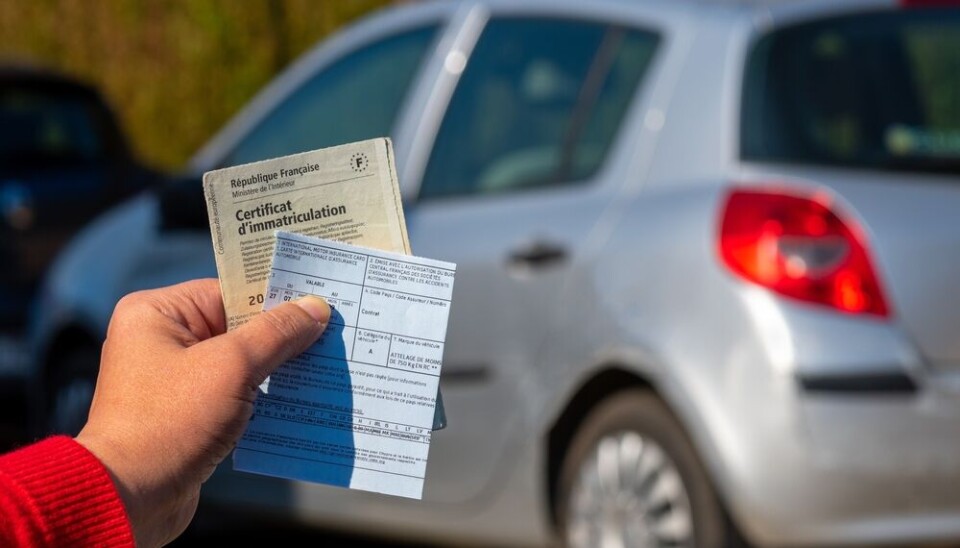
The definition of normal residence for vehicle registration purposes has been clarified through EU directive language and a series of European Court of Justice rulings. The key factors registration authorities consider include where the person sleeps on most nights, where their family lives, where their social ties are centred, where they pay personal income tax, where they hold a driving licence, and where their other vehicle-related documents such as insurance are based.
No single factor is determinative. An EU citizen working in Germany from Monday to Friday and returning to their family in France every weekend would typically be considered normally resident in France for registration purposes, regardless of how many nights per week they sleep in Germany.
This matters practically because it determines not just where the vehicle must be registered but also the timeline within which re-registration must occur when circumstances change. Most EU member states set a time limit of between 30 and 90 days after establishing residency within which a foreign-registered vehicle must be re-registered locally.
The EU framework makes specific provision for certain categories of people whose circumstances genuinely span multiple member states in ways that the simple residency principle does not handle cleanly.
Cross-border workers — people who work in one EU country but return to their country of residence in another EU country at least once a week — are specifically addressed. Under EU rules, cross-border workers are entitled to use a vehicle registered in their country of residence in the country where they work, without being required to re-register the vehicle in the working country. This exception is narrow and specifically applies to the commuting context.
Expatriates on temporary international assignments occupy a more complex position. A person temporarily assigned to work in another EU country for a defined period while maintaining their normal residence in their home country is generally treated as maintaining residency in the home country for vehicle registration purposes. Consequently, the vehicle registered in the home country can be used in the working country during the assignment period.
Most national registration authorities do not have a formal process for verifying and approving these situations in advance. The rules exist, but their application depends heavily on individual circumstances being correctly understood by the authority and the driver being able to clearly demonstrate their situation if questioned.
Students represent a specific category where the registration rules are applied with some flexibility in most EU member states. A student from one EU country studying in another is generally not considered to have transferred their normal residence to the study country for vehicle registration purposes, particularly if they return to their home country during academic breaks and intend to return home after completing their studies.
This means a German student studying in Spain for three years can generally continue to use a German-registered vehicle in Spain during their studies without being required to re-register in Spain. The practical challenge is that Spain, like most EU countries, has rules about how long a foreign-registered vehicle can be used on its roads, and these rules are enforced with varying degrees of rigour depending on the country and the circumstances.
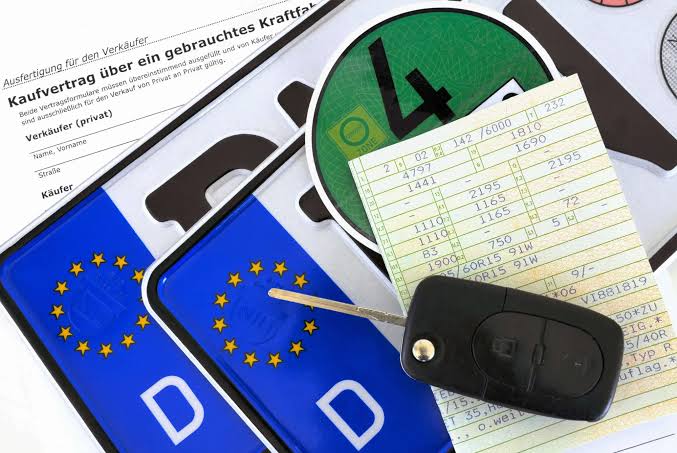
EU law and most national implementations allow for the temporary use of a foreign-registered vehicle in any EU member state without registration requirements. The key word is temporary. Most countries set a threshold — typically between 90 and 183 days per calendar year — below which a foreign-registered vehicle can be used without triggering re-registration obligations.
For buyers who genuinely spend significant time in multiple EU countries without establishing permanent residency in any single one, these temporary use provisions are the framework within which their vehicle use is legally accommodated. The vehicle should be registered in the EU country where residency is genuinely centred, and temporary use in other countries is permitted within the applicable time limits.
Practical Consequences of Registering in the Wrong Country: Attempting to register a vehicle in an EU country where you are not resident creates several categories of risk that go beyond a simple administrative correction.
Vehicle insurance contracts are tied to the country of registration. An insurer who discovers that the policyholder's true residence is in a different country can void the policy due to false pretences, leaving the driver personally liable for any accident costs.
Tax authorities in the country of genuine residence may treat an improperly registered foreign vehicle as a taxable asset, assessing back-dated vehicle taxes. The financial exposure can significantly exceed any initial tax savings.
Law enforcement in your true country of residence has the authority to compel local re-registration. Non-compliance can lead directly to substantial fines, vehicle impoundment, and potentially criminal charges for tax evasion.
Whatever your residency situation and whichever country’s registration process applies to your vehicle, the COC requirement does not change. Registration in any EU member state requires a valid Certificate of Conformity for vehicles originally registered in another EU country. The residency question determines which country processes the registration. The COC question determines whether the registration can proceed at all.
If you are navigating a complex residency situation and need to register a vehicle — whether establishing registration for the first time in a new country of residence or re-registering after a move — ensuring the COC is available before approaching the registration authority is the step that most commonly causes unexpected delays. Retrieve it through auto-coc.eu if the document is not already in your possession.


Official, manufacturer-issued certificates for 90+ brands.
Express delivery available — PDF sent immediately upon processing.
Browse All COCs →


