

Written by
I. Constantin

Date released
19.06.2026
Comments
0 so far - be the first!
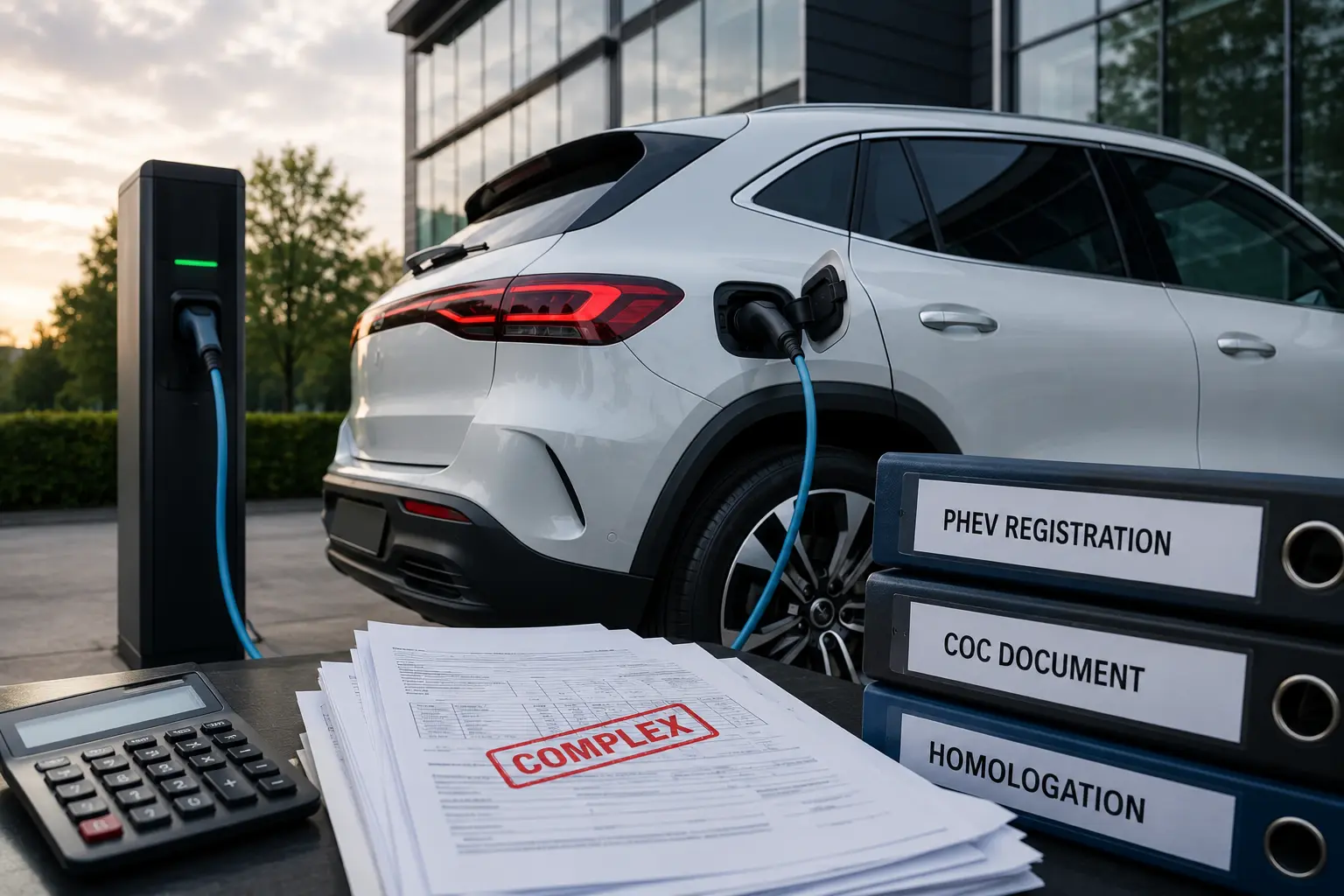
If you assumed that a plug-in hybrid would be simpler to register than a pure electric vehicle because it also has a conventional combustion engine, the reality is precisely the opposite. The PHEV COC is arguably the most data-dense document in the standard passenger vehicle registration toolkit, combining the technical fields of both a conventional combustion vehicle and an electric vehicle into a single certificate that covers two distinct powertrain modes, two sets of emissions figures, two fuel consumption profiles, and a combined test cycle that most registration officers find significantly more complex to process than either a pure EV or a pure combustion vehicle.
This complexity creates real practical problems for buyers importing used PHEVs across EU borders, particularly in markets where plug-in hybrids are still relatively new and registration authority staff are not yet experienced with the specific data fields involved.
A pure combustion vehicle produces emissions and consumes fuel in one mode. A pure electric vehicle produces no tailpipe emissions and consumes electrical energy in one mode. Both are straightforward from a COC data perspective.
A plug-in hybrid produces different emissions, consumes different energy quantities, and delivers different performance figures depending on which powertrain mode is active. The COC must capture all of this, resulting in a document that contains separate data entries for combustion-only operation, electric-only operation, and combined cycle operation under the WLTP test protocol.
The combined cycle figures — the ones that feature most prominently in marketing materials and that buyers most commonly cite — represent a weighted average of electric and combustion operation under specific test conditions that assume a fully charged battery at the start of the test. These conditions are rarely replicated in real-world driving, which is one of the reasons PHEV real-world fuel consumption typically differs more substantially from COC figures than almost any other vehicle type.
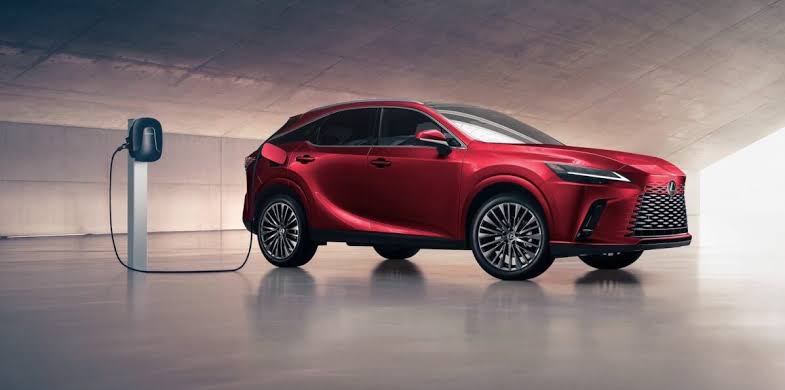
The WLTP test protocol for PHEVs involves two separate test sequences. The first is conducted with a fully charged battery and runs the vehicle until the battery is depleted, recording the electric range, the fuel consumption during combined electric and combustion phases, and the CO2 emissions during the same period. The second sequence is conducted with a depleted battery, testing the vehicle in charge-sustaining mode to establish its combustion-only performance.
The COC will contain figures from both sequences alongside the combined weighted figures. Buyers and registration authorities need to understand which set of figures applies to which regulatory purpose.
CO2 emissions on the COC are the weighted combined figures and are the ones used for most EU member state taxation purposes. In countries with CO2-based purchase taxes or annual road taxes, the PHEV's official CO2 figure may determine a significantly lower tax liability than a comparable pure combustion vehicle.
Official PHEV figures can be dramatically lower than charge-sustaining combustion-only metrics, acting as a primary financial incentive built into the EU framework.
Electric range on the COC is stated as the EAER (Electric-Only Range) figure from the charge-depleting test. This specific figure determines eligibility for EV-related benefits in many EU countries, including access to clean air zones, preferential parking, and local subsidy programmes.
Crucial Action: Always verify that the EAER electric range stated on your PHEV's COC meets the exact threshold required by your national registration authority.
The PHEV’s artificially low COC CO2 figure has been one of the most politically contentious aspects of the EU’s vehicle emissions testing framework, and several member states have introduced measures to mitigate its tax implications. Understanding how your destination country treats PHEV CO2 figures is essential before completing any cross-border PHEV purchase.
Some EU countries take the COC’s combined weighted CO2 figure at face value for all tax purposes. In these countries, a PHEV with a COC CO2 figure of 22g/km is taxed as if it produces 22g/km regardless of how the vehicle is actually used. This can produce very favourable tax treatment relative to a pure combustion equivalent.
Other EU countries have introduced correction factors or alternative assessment methods that weight the tax calculation more heavily toward the combustion-only figures, reducing the tax advantage of the low combined CO2 figure. A small number have moved to real-world fuel consumption assessments for tax purposes, effectively bypassing the COC figures altogether for taxation.
Before purchasing a used PHEV from another EU country, verify how your national registration authority and tax system treat PHEV CO2 figures. The tax implication can be significant in either direction.

Unlike pure EVs, where battery degradation is a highly visible issue affecting the vehicle’s primary function, PHEV battery degradation is often invisible to buyers because the combustion engine continues to provide full functionality regardless of battery condition. A PHEV with a significantly degraded battery can be driven, refuelled, and used normally without the owner ever noticing that the electric range has reduced to a fraction of what the COC states.
This creates a specific risk for used PHEV buyers. The COC states the electric range as tested when the vehicle was new. A three or four year old PHEV with a degraded battery may deliver a real-world electric range that is 30 to 50 percent lower than the COC figure. If the buyer is purchasing the vehicle specifically because of the electric range benefits — tax treatment, clean air zone access, subsidy eligibility — this degradation can undermine the entire value proposition.
Unlike pure EVs, PHEVs are not routinely sold with battery health certificates. Requesting a battery state of health readout from a dealer or service centre before purchase is the most reliable way to establish the actual electric range capability of the specific vehicle you are considering.
The PHEV COC’s complexity creates a practical problem that buyers in some EU markets encounter regularly. Registration authority staff who process dozens of standard combustion vehicle COCs per day and have limited experience with PHEVs may struggle with the dual-mode data structure of the document. This does not reflect any deficiency in the COC itself but can result in processing delays, requests for additional clarification, or incorrect data entry during the registration process.
In EU countries with high PHEV market penetration — the Netherlands, Sweden, Germany, and increasingly France — registration offices have processed enough PHEV COCs that the process is generally smooth. In markets where PHEVs are newer, buyers can experience longer processing times and occasional requests for supplementary explanation of the COC data.
Having a clear, complete COC with all fields correctly populated is particularly important for PHEV registrations. If your PHEV’s COC is missing, damaged, or references an older document format, obtaining a clean replacement through auto-coc.eu before your registration appointment reduces the risk of processing complications.


Official, manufacturer-issued certificates for 90+ brands.
Express delivery available — PDF sent immediately upon processing.
Browse All COCs →


