
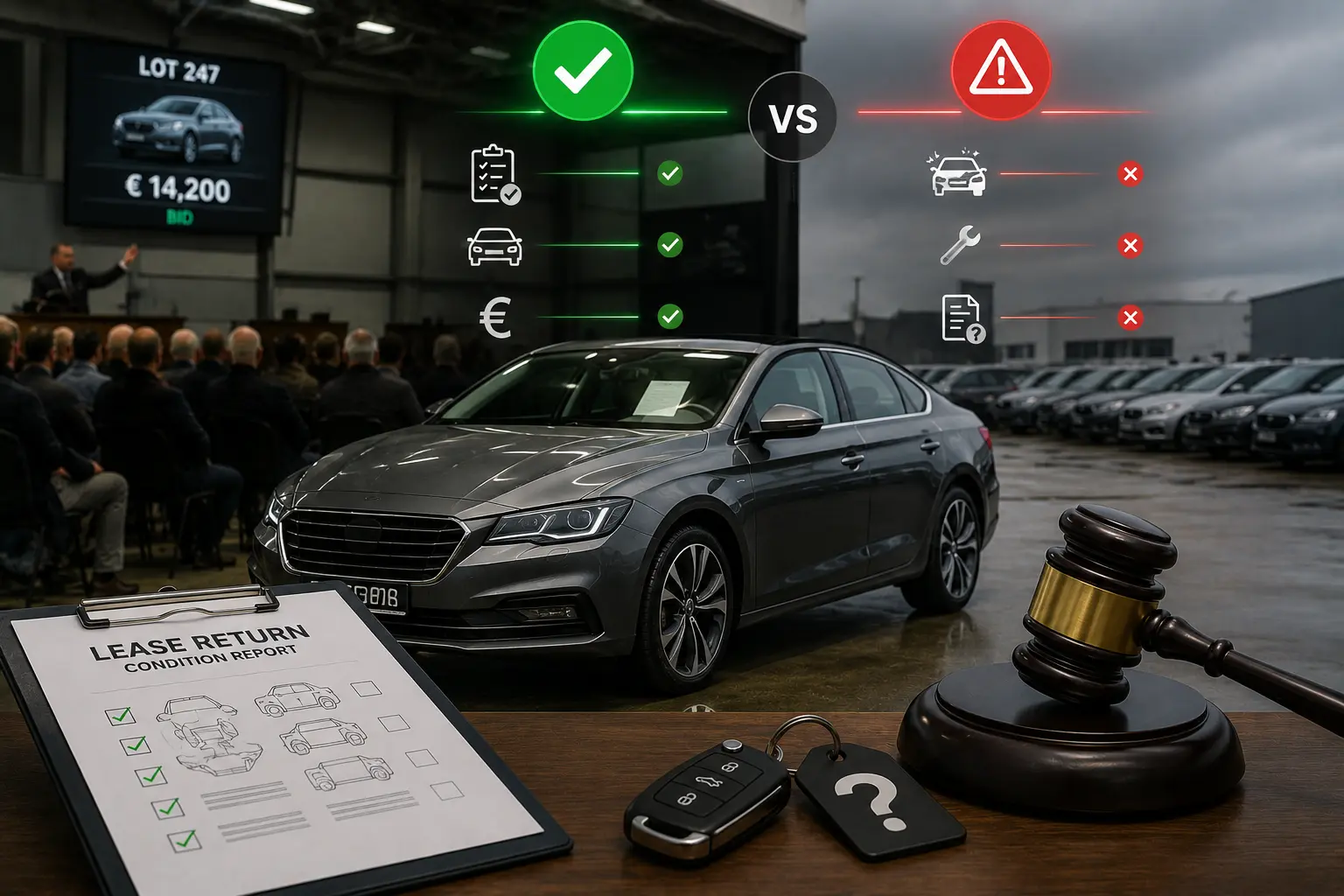
If you know where to look and what to check, leasing return vehicles sold at auction represent some of the best value available in the European used car market. These are cars that have been professionally maintained under manufacturer warranty, driven by company employees who had every incentive to avoid accidents, and returned at a predetermined mileage in a condition that leasing companies inspect rigorously before remarketing.
The value case is straightforward. The risks are less obvious, and most buyers walking into a leasing return auction for the first time are not aware of the specific documentation issues that can turn a good purchase into a registration headache. This article covers both sides clearly so you can bid with genuine confidence.
A vehicle coming off a corporate lease has lived a documented life. The leasing company required the lessee to maintain the vehicle according to the manufacturer’s service schedule, carry comprehensive insurance, and return the car within defined mileage and condition parameters. Vehicles that came back damaged or in poor condition generated damage charges against the lessee’s deposit, creating a financial incentive for the driver to treat the car reasonably well.
From a mechanical perspective, leasing return vehicles are typically among the better-maintained examples in the used market. The service history is usually complete, carried out at authorised workshops, and verifiable through the manufacturer’s digital records. Engine and drivetrain components have been serviced on schedule rather than at the owner’s convenience.
From a fraud perspective, the risk profile is lower than private sales. The vehicle’s identity has been verified multiple times — at lease inception, during annual inspections, and at return. The mileage has been recorded at multiple points through the lease period. There is a documented chain of custody from manufacturer to leasing company to remarketing.
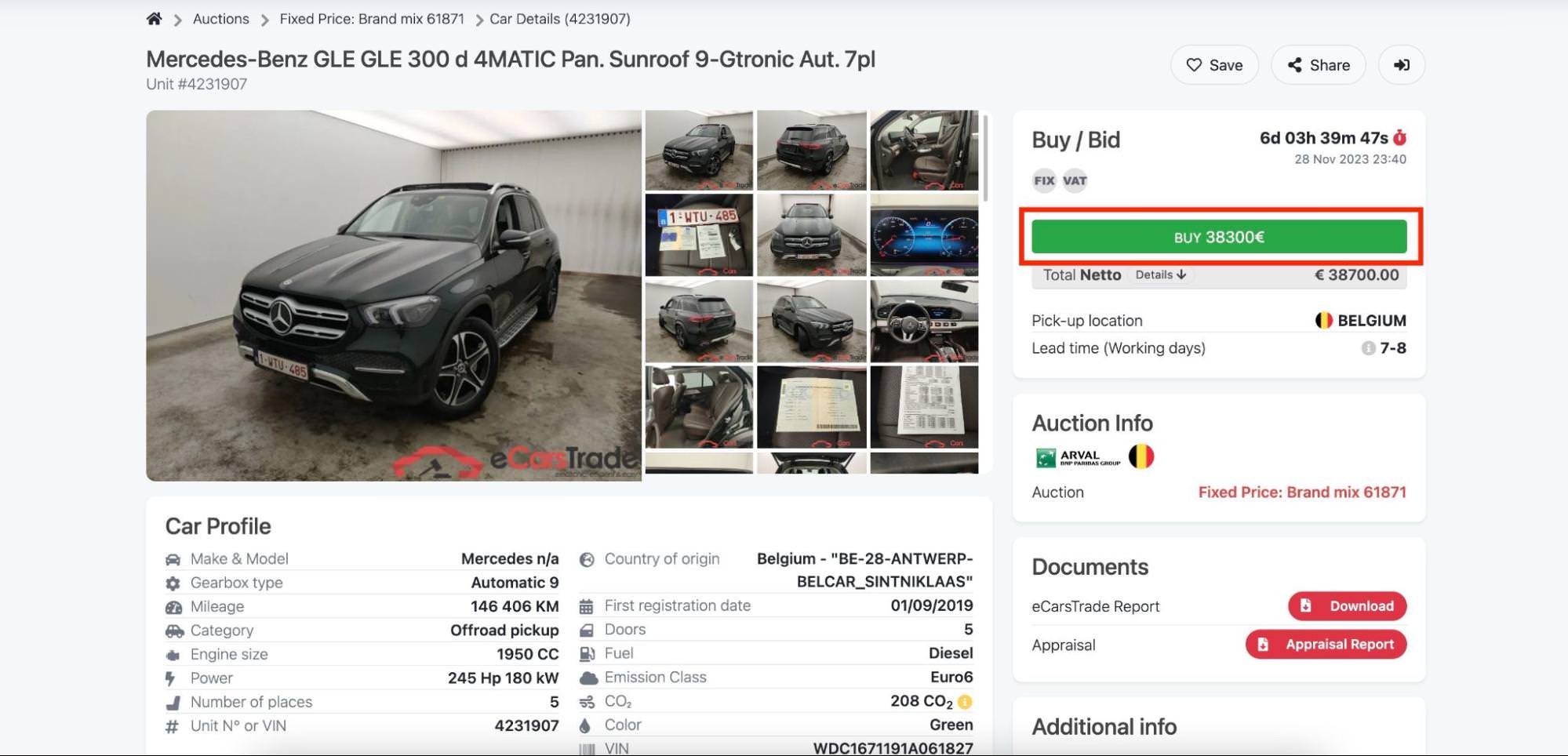
Here is the issue that no auction catalogue mentions and that most first-time buyers at leasing return auctions discover too late. Leasing companies are not in the business of registering cars in foreign countries. Their administrative processes are optimised for the market in which the vehicle was originally placed on lease. When the vehicle is returned and sold at auction to a buyer who will register it in a different EU country, the COC question arises — and the answer is almost always the same.
Leasing companies do not routinely retain the COC. The vehicle arrived from the dealer with the document, it was used for the original registration, and from that point it was either filed away imperfectly, passed to the lessee, or simply lost in the administrative shuffle of a fleet operation managing hundreds or thousands of vehicles simultaneously.
When you purchase a leasing return car at auction, assume by default that the COC will not be in the documentation package. Treat its presence as a pleasant surprise rather than an expectation. Budget for and plan to retrieve it through auto-coc.eu as a standard part of your post-purchase process rather than discovering the gap when you are already at the registration authority.


Leasing return vehicles reach auction through several channels. Large leasing companies — LeasePlan, Arval, ALD Automotive, Alphabet, and others — either operate their own remarketing platforms or contract with major auction houses including BCA, ADESA, and Autorola. Some vehicles go through physical auction halls. An increasing proportion are sold through online-only platforms where buyers bid without ever seeing the car in person.
For in-person auctions, buyers typically have a preview period before the sale in which they can inspect vehicles, check documentation, and ask questions of the auction staff. Use this time fully. Check every document present against the VIN, note the service history completeness, and establish definitively whether a COC is included. If it is not, factor the retrieval cost and timeline into your maximum bid calculation.
For online auctions, the documentation situation is described in the vehicle listing, though descriptions vary in completeness and accuracy. If the COC is not explicitly listed as present, assume it is absent. Request clarification from the auction platform before bidding if the listing is ambiguous.
Every leasing return vehicle sold at auction comes with a condition report prepared at the point of return. This document records visible cosmetic damage — scratches, dents, kerbed alloys, interior wear — and is used to calculate any damage charges against the lessee. For a buyer, it provides a useful baseline of the vehicle’s cosmetic condition at the time of remarketing.
What the condition report does not cover is mechanical condition below the surface. It does not record worn brake pads, marginal tyre depth, ageing suspension components, or any issues that were not visible to the inspector conducting the return assessment. Leasing companies assess cosmetic damage because that affects the vehicle’s sale price at remarketing. They do not conduct mechanical inspections because their interest ends at the point of sale.
For high-value purchases, commissioning an independent mechanical inspection before the auction is worth the cost. For lower-value vehicles where an independent inspection is not practical, building a mechanical contingency into your budget is the sensible alternative.

One of the genuine advantages of leasing return vehicles is mileage reliability. Leasing contracts specify an annual mileage allowance, and the lessee pays a per-kilometre surcharge for any excess. This creates a financial record of the vehicle’s mileage at the point of return that is independent of the odometer reading.
Cross-reference the odometer reading at auction against the mileage implied by the lease contract terms if this information is available. If the vehicle was on a 30,000 km per year contract for three years and the odometer shows 82,000 km, the numbers do not add up and the discrepancy requires explanation.
The service history provides additional mileage data points. Each workshop visit records the odometer reading, giving you a progression that either corroborates or contradicts the return mileage. A vehicle with complete authorised service records has one of the most reliable mileage trails available in the used market.
Official, manufacturer-issued certificates for 90+ brands.
Express delivery available — PDF sent immediately upon processing.
Browse All COCs →Purchasing a leasing return car from a foreign auction introduces VAT and tax considerations that private purchases between individuals do not. Leasing companies are VAT-registered businesses, which means the sale is subject to commercial VAT rules that vary across EU member states.
In some cases, VAT-registered business buyers can reclaim the VAT on the purchase. Private buyers generally cannot. The applicable VAT rate is determined by the country in which the auction takes place, and the paperwork provided by the auction house should clearly state the VAT treatment of the transaction.
Cross-border purchases also trigger customs documentation requirements in some scenarios — particularly if the vehicle is being collected by a transporter rather than driven directly across the border. Confirm the documentation package required for transit with both the auction house and your transport provider before the sale completes.
Once you have purchased a leasing return vehicle and established that the COC is not in the documentation package, the retrieval process is straightforward. Take the vehicle’s VIN from the documentation provided by the auction house and submit it through auto-coc.eu. The platform accesses manufacturer databases directly and can retrieve the document for the vast majority of makes and models sold through European leasing fleets.
For the most common fleet vehicles — Volkswagen Group products, BMW, Mercedes, Renault, Ford, and Stellantis brands — retrieval is typically fast and reliable. For less common fleet vehicles, the timeline may be slightly longer but the process is the same. Having the COC in hand before your registration appointment removes the single most common documentation obstacle that leasing return auction buyers encounter.
Enter your VIN, select your brand, and choose standard or express delivery.
Best price guaranteed · EU-compliant · Multilingual support


