How to Register a Foreign Car in Spain: Documents, Fees & COC Requirements

Written by

I. Constantin

Date released

30.04.2026

Comments

0 so far - be the first!

Moving to Spain or buying a vehicle abroad? Registering a foreign car in Spain can feel overwhelming at first, but with the right preparation it becomes a manageable process. Whether you’re an expat relocating from another EU country or importing a vehicle from outside the European Union, this guide walks you through every step — from gathering documents to paying the right fees.

Why You Must Register Your Foreign Car in Spain

Spanish law requires that any vehicle used regularly on Spanish roads be registered with the Dirección General de Tráfico (DGT), the country’s traffic authority. If you’ve moved to Spain and intend to stay for more than six months, or if you’ve purchased a vehicle abroad, you must re-register it under Spanish plates. Driving on foreign plates beyond the legal grace period can result in fines, and your vehicle may not be covered by your insurance in the event of an accident.

The process applies to residents arriving from other EU member states as well as those importing from non-EU countries, though the paperwork differs considerably between the two.

Step 1: Gather Your Documents

Before you visit a DGT office or appoint a gestor (an administrative agent who can handle the process on your behalf), make sure you have the following documents ready:

Personal identification:

  • Your valid NIE (Número de Identificación de Extranjero) — essential for any legal transaction in Spain
  • Your passport or national ID card
  • Proof of residence (empadronamiento certificate from your local town hall)

Vehicle documents:

  • Original vehicle title or ownership certificate from the country of origin
  • Proof of purchase (invoice or bill of sale)
  • Technical inspection certificate (ITV) — you’ll need a Spanish roadworthiness test if the vehicle doesn’t already comply with Spanish standards
  • Insurance policy valid for use in Spain

Tax and customs documents (for non-EU imports):

  • Customs clearance certificate (DUA — Documento Único Administrativo)
  • Proof that import VAT and any applicable duties have been paid

For EU-imported vehicles, customs paperwork is generally not required, but you’ll still need to demonstrate that the vehicle is legally compliant.

Step 2: Obtain the Certificate of Conformity (COC)

One of the most critical, and often overlooked, documents in the registration process is the Certificate of Conformity, commonly known as the COC. This document is issued by the vehicle’s manufacturer and certifies that your car meets all relevant EU technical and safety standards.

The COC is required by the DGT to confirm that the vehicle complies with European homologation rules. Without it, your registration application will be rejected, and you’ll face additional costs and delays to obtain an individual technical approval instead.

The COC contains key technical data about your vehicle: engine specifications, dimensions, emissions levels, axle weights, and more. Spanish authorities use this information to classify the vehicle and assign the correct tax category.

Where to get your COC? Many car owners discover they never received a COC with their vehicle, or the document has been lost. In these cases, you can obtain a replacement quickly and easily online through auto-coc.eu. Our service covers a wide range of European manufacturers and delivers your official COC document digitally, so you can move forward with registration without unnecessary delays.

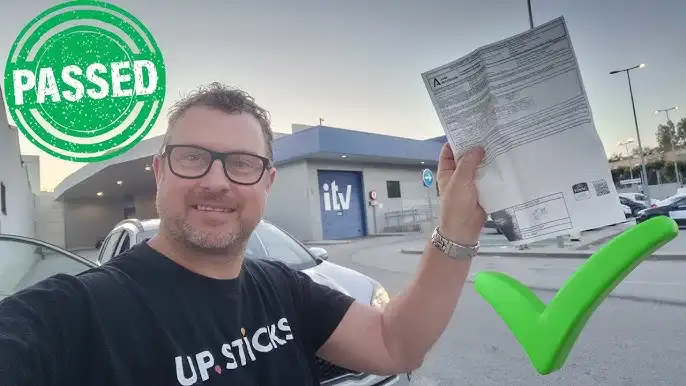
Step 3: Pass the ITV Inspection

The ITV (Inspección Técnica de Vehículos) is Spain’s equivalent of the MOT in the UK or the TÜV in Germany. Before a foreign vehicle can be registered, it must pass this roadworthiness inspection at a certified ITV station.

During the inspection, technicians will check:

  • Lights, brakes, and tyres
  • Emissions levels
  • Structural integrity
  • Compliance with Spanish road regulations

If your vehicle was already registered in another EU country and has a valid equivalent inspection certificate, the process may be simplified. However, inspectors may still require the COC to verify technical specifications before issuing a Spanish ITV certificate.

Step 4: Pay the Registration Tax (Impuesto de Matriculación)

Spain levies a special registration tax (Impuesto Especial sobre Determinados Medios de Transporte) on vehicles being registered for the first time in the country. The rate depends on the vehicle’s CO₂ emissions:

CO₂ Emissions (g/km)Tax Rate
Up to 120 g/km0%
121 – 159 g/km4.75%
160 – 199 g/km9.75%
200 g/km or more14.75%

Zero-emission electric vehicles are generally exempt from this tax. The tax is calculated on the vehicle’s value, so it’s important to have documentation that accurately reflects the purchase price.

In addition to the registration tax, you’ll pay a modest DGT administrative fee for processing the plates and registration certificate. These fees are updated periodically but typically fall in the range of €50–€100.

Step 5: Submit Your Application to the DGT

With all documents in hand, you can submit your registration application either in person at your nearest DGT provincial office or through a gestor. Using a gestor is highly recommended for non-Spanish speakers, as the process involves detailed paperwork in Spanish and any errors can cause significant delays.

The DGT will review your documents, verify the vehicle’s identity and compliance, and — if everything is in order — issue your Spanish registration certificate (permiso de circulación) and assign a Spanish plate number.

Processing times vary, but you can typically expect to receive your registration certificate within two to four weeks.

Order Your COC Today

Official, manufacturer-issued certificates for 90+ brands.

Express delivery available — PDF sent immediately upon processing.

Browse All COCs →

Common Mistakes to Avoid

  • Starting the ITV before obtaining the COC. Some ITV stations require the COC before they’ll complete the inspection. Get your COC first.
  • Waiting too long after arrival. Spain has strict deadlines for re-registration. Don’t let the clock run out.
  • Underestimating the registration tax. High-emission vehicles can face a significant tax bill. Research your vehicle’s CO₂ rating in advance.
  • Using an expired foreign inspection certificate. Ensure all documents are current before submitting your application.

The Bottom Line

Registering a foreign car in Spain requires patience and careful preparation, but it’s entirely doable when you understand what’s needed. The COC is the cornerstone of the process — without it, nothing else can move forward. If you need to obtain or replace your Certificate of Conformity quickly, visit auto-coc.eu to get your document issued efficiently and start your Spanish registration on the right foot.

With the right documents, the correct fees paid, and a successful ITV inspection, you’ll be driving on Spanish roads legally and confidently in no time.

Ready to Order?

Enter your VIN, select your brand, and choose standard or express delivery.

Best price guaranteed · EU-compliant · Multilingual support

About Auto-COC.eu: We provide authentic, manufacturer-issued Certificates of Conformity for over 90 vehicle brands across Europe. All COCs are fully EU-compliant and accepted by registration authorities across all EU member states. Processing times listed in this article are indicative averages based on typical orders and may vary by brand, vehicle age, and order volume. For a specific estimate, contact our support team at office@auto-coc.eu.

Other posts you might like

Want a fast & cheap COC? Find yours now!