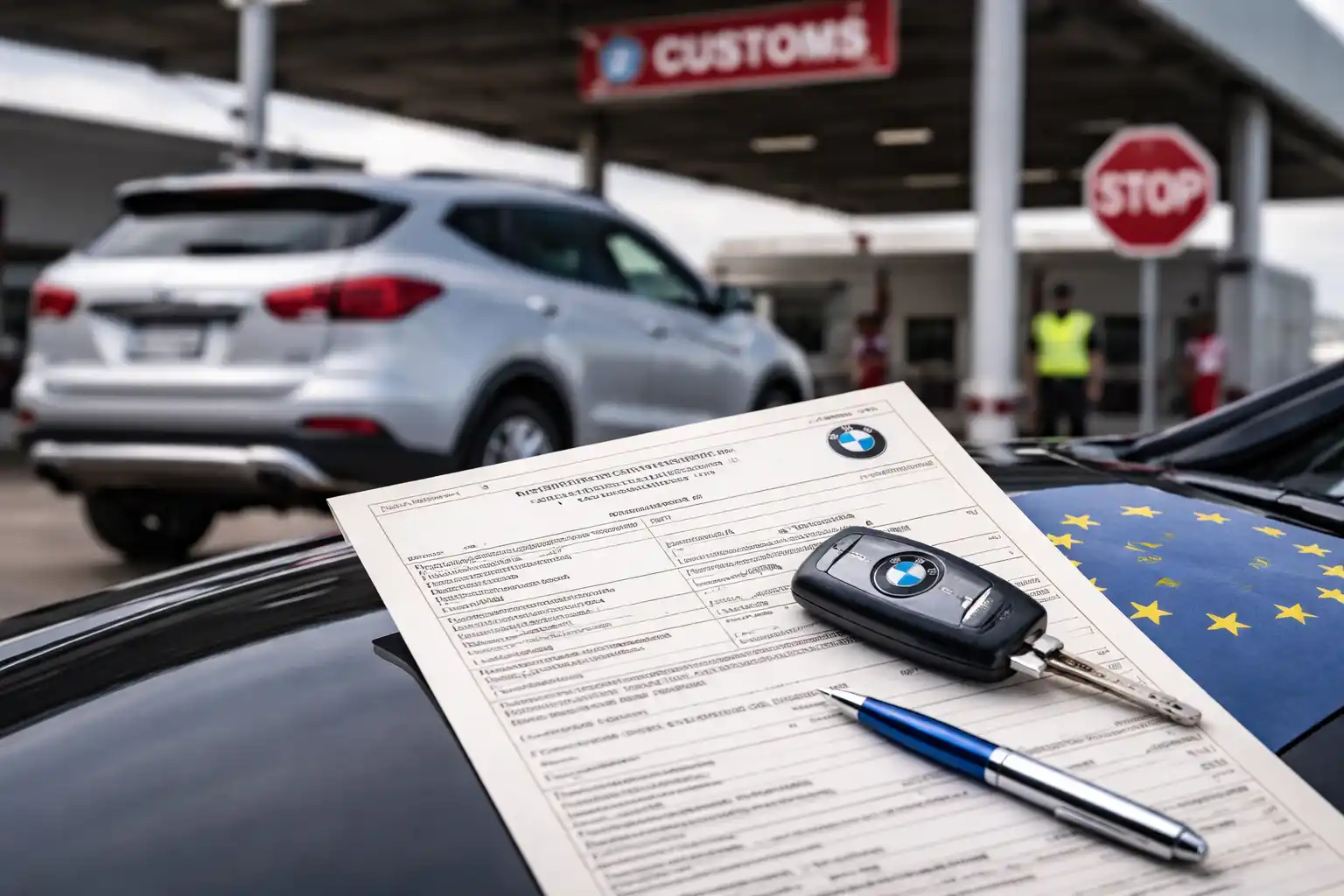
Is COC for Non EU Car available? This is one of the most common questions asked by anyone who has imported a vehicle from outside Europe. The short answer is: it depends. The long answer, which this guide will walk you through in full, is considerably more nuanced, but also more hopeful than most people expect. In 2026, with the right knowledge and the right support, registering a non-EU specification vehicle in Europe is entirely achievable.
The Certificate of Conformity (COC) is an official document issued by a vehicle manufacturer certifying that a specific car meets all applicable EU regulatory and technical standards at the time of production. It is the primary document used by registration authorities across Europe to confirm that a vehicle is legally eligible for use on public roads. Without a valid COC, no vehicle can be registered in any EU member state.
The issue is that the document, by definition, was never issued in the first place, or was issued to a different technical specification than the one required for EU registration. Manufacturers produce vehicles to the regulatory standards of the market they are intended for.
A car built for the US market meets Federal Motor Vehicle Safety Standards (FMVSS). A Japanese domestic market (JDM) vehicle meets Japanese standards. A Gulf-spec car is built for extreme heat and very different fuel compositions. None of these automatically qualify for a standard EU COC.
Understanding this distinction is the essential starting point for anyone seeking a COC for a non EU car.
EU-specification vehicles are built to meet a comprehensive set of European directives covering safety, emissions, lighting, noise levels, and dozens of other parameters. When a manufacturer produces a vehicle for a different market, many of these specifications change. A COC for a non EU car cannot simply be issued by retrieving data from a database, because the EU-compliant version of that vehicle may have different components, different emission control systems, and different safety features than the one you actually own.
A standard COC for a non EU car from the US, Japan, or Gulf will often not exist, because no EU-compliant version of that specific vehicle configuration was ever registered. The registration authority needs proof that your vehicle meets EU standards, and in the absence of a manufacturer-issued COC, alternative legal pathways must be used.

The United Kingdom represents a special and important case in the world of COC for non EU car requests. Until 31 December 2020, UK vehicles were fully EU-compliant and came with standard EU COCs. Many of these documents remain valid and retrievable today for vehicles manufactured before that date. For UK-origin vehicles first registered before Brexit, auto-coc.eu can often retrieve the original COC directly from the manufacturer’s database — making the process almost as simple as for any other European vehicle.
For UK vehicles manufactured or first registered after Brexit, the situation is more complex. UK regulations have started to diverge from EU standards in certain areas, meaning that a COC for a non EU car sourced from post-Brexit UK may require additional verification or supplementary documentation.
auto-coc.eu’s expert team assesses each case individually and advises on the optimal path before you commit to any costs.
The honest answer is: sometimes yes, sometimes no, and sometimes a modified version of the process applies. Whether a standard COC for a non EU car is obtainable depends on several intersecting factors. Below is a clear breakdown of the most common scenarios.
A standard manufacturer-issued COC for a non EU car is most likely to exist if the vehicle was originally produced by a major European manufacturer (BMW, Mercedes-Benz, Volkswagen, Audi, Volvo, etc.) and was exported to a non-EU market, meaning an EU-specification version of the same model does exist in the manufacturer’s records.
In these cases, the manufacturer can sometimes issue or verify a COC based on the EU-equivalent homologation, even if the specific unit was exported.
This applies to many European-brand vehicles found in the UK, Switzerland, Norway, and certain Gulf countries where European manufacturers maintained close production standards.
A standard COC for a non EU car will not be available in the following situations:
In these cases, a standard COC for a non EU car simply does not exist in any manufacturer database. This does not mean registration is impossible; it means the pathway to registration goes through an alternative approval process rather than a standard COC. The next section explains all available alternatives in detail.
auto-coc.eu specialises in COC retrieval and import documentation across all vehicle origins. Before you spend money on IVA tests, homologation engineers, or national approval procedures, contact us for a free pre-order consultation on your COC for non EU car situation.
The team will assess your VIN, origin country, and vehicle spec — and tell you exactly what is possible.
Visit auto-coc.eu for Free Consultation →When a standard COC for a non EU car is unavailable, several legal alternative pathways exist to achieve EU registration. Each has different costs, timelines, and complexity levels. Understanding all of them is essential for making the right decision for your specific vehicle and situation.
Individual Vehicle Approval (IVA) is the most widely used alternative to a standard COC for a non EU car across Europe. Under the IVA process, the vehicle is submitted to a testing authority (such as the DVSA in the UK, TUV in Germany, RAR in Romania, or equivalent bodies in other countries) for a comprehensive technical inspection against EU standards. If the vehicle passes, it receives an IVA certificate which serves as the functional equivalent of a COC for registration purposes.
The IVA process typically takes between 4 and 12 weeks and costs anywhere from EUR 500 to EUR 2,000 or more, depending on the country, the vehicle type, and how many modifications are required to achieve compliance. Common modifications needed for a COC for non EU car equivalency through IVA include:

National Type Approval (NTA) is a country-by-country process that allows a single vehicle to be approved for registration by the national authority, even when no EU type-approval or COC for non EU car exists. NTA is typically slower and more expensive than IVA, with timelines of 8 to 20 weeks and costs that can reach EUR 5,000 or more for complex vehicles. However, it is a legally robust pathway that results in full national registration.
NTA is most commonly used for rare, exotic, or heavily modified vehicles for which the IVA process is not well-suited; for example, classic American muscle cars, heavily modified Japanese imports, or specialist vehicles. If your vehicle falls into this category and a standard COC for a non EU car is unobtainable, NTA may be the most appropriate route.
In a limited number of cases, the original vehicle manufacturer can be persuaded to issue or extend a COC to cover a non-EU specification unit, particularly when the vehicle is closely related to an EU-specification version. This process, sometimes called a manufacturer’s declaration of conformity extension, involves the manufacturer certifying that the non-EU unit meets EU standards either as-is or after specified modifications.
This pathway for obtaining a COC for non EU car is rare, time-consuming, and dependent entirely on the manufacturer’s willingness to cooperate. It is most feasible for large European manufacturers (BMW, Mercedes-Benz, Audi, Volvo) with non-EU exported units that were built on the same production line as EU-spec vehicles.

The EU has mutual recognition agreements with a small number of non-EU countries whose vehicle safety and emissions standards are sufficiently aligned with EU regulations. For vehicles originating from these countries, a simplified approval process may be available. As of 2026, the most relevant agreements cover vehicles from Switzerland, Norway, and certain other EEA nations.
For vehicles from countries covered by these agreements, the cost and time required to obtain the functional equivalent of a COC for a non EU car is significantly reduced compared to a full IVA or NTA.
The table below summarises all available pathways for obtaining registration documentation equivalent to a COC for a non EU car in 2026, including typical costs, timelines, and the most appropriate provider for each route:
| Pathway | Best For | Timeline | Cost (EUR) | Where to Start |
|---|---|---|---|---|
| Standard COC | EU-spec vehicle | Quick (1–10 days) | EUR 89–350 | auto-coc.eu |
| IVA (Individual Approval) | Non-EU spec, any brand | 4–12 weeks | EUR 500–2,000+ | National authority |
| National Type Approval | Non-EU spec, single vehicle | 8–20 weeks | EUR 1,500–5,000+ | National authority |
| Manufacturer Extension | Non-EU spec (rare cases) | 2–8 weeks | EUR 300–800 | Manufacturer/Importer |
| Mutual Recognition | Select non-EU countries | 2–6 weeks | EUR 200–600 | National authority |
The complexity of obtaining a COC for a non EU car varies significantly depending on where the vehicle came from. Here is a detailed breakdown by origin country, covering the main technical gaps, typical approval pathway, and estimated difficulty level:
| Origin | Drive Side | Compliance Gaps | Typical Pathway | Difficulty |
|---|---|---|---|---|
| United States | LHD / RHD | Lighting, bumpers, emissions | IVA or NTA required | High |
| United Kingdom | RHD | Mostly compliant, some gaps | Often COC available* | Low–Medium |
| Japan (JDM) | RHD | Emissions, lighting, speed limiter | IVA or NTA required | High |
| Gulf / Middle East | LHD | Emissions (no cat), cooling | IVA or NTA required | Very High |
| Australia | RHD | Lighting, ADR vs ECE standards | IVA or NTA required | High |
| Canada | LHD | Similar to US spec | IVA or NTA required | High |
* Post-Brexit UK vehicles manufactured before January 2021 typically have a retrievable EU COC. Vehicles manufactured after that date require individual assessment. auto-coc.eu checks every UK VIN individually and advises on the correct approach for your specific COC for non EU car situation.
The very first step for any COC for non EU car situation should be a VIN check. auto-coc.eu offers a free pre-order VIN verification that determines whether a retrievable EU COC exists for your specific vehicle in BMW’s, Mercedes-Benz’s, Volkswagen Group’s, or other manufacturer databases. This check takes minutes and can save you hours of wasted effort pursuing the wrong pathway.
If a standard COC for a non EU car is retrievable, auto-coc.eu processes your order at its highly competitive rates , with delivery in 1 to 3 business days.
With years of experience handling COC for non EU car requests across dozens of vehicle brands and origins, auto-coc.eu has become the trusted first point of contact for importers, private buyers, fleet managers, and dealerships across Europe. The combination of a fast, affordable standard COC service and expert consultation on non-standard cases makes it the single most useful resource for anyone dealing with a COC for non EU car challenge in 2026.
When a standard COC for a non EU car is not available and an IVA or NTA process is required, the vehicle will almost always need modifications to bring it into compliance with EU standards. The most common required modifications are as follows:
The total cost of these modifications varies widely: a relatively minor case (UK vehicle, a few lighting adjustments) might cost EUR 200–500, while a comprehensive US-spec conversion can easily exceed EUR 3,000–5,000 before the IVA fee is even considered.
Whether your vehicle ultimately requires a standard COC retrieval or a full IVA/NTA process, following a structured approach will save you time, money, and frustration. Here is the optimal step-by-step process for 2026:
Obtain your vehicle's full 17-character VIN before doing anything else. This is your primary identifier for all COC for non EU car enquiries.
Visit auto-coc.eu and use the free VIN check to determine whether a standard COC is retrievable from the manufacturer's database.
If available, place your order on auto-coc.eu and receive the document in 5–15 business days. Process complete.
If no standard COC exists, request a free consultation from our team to determine the appropriate approval pathway (IVA, NTA, or extension).
Engage a vetted IVA/NTA specialist to assess required modifications and provide a cost estimate before committing to the import.
Complete all required modifications with a qualified workshop experienced in EU compliance work.
Submit the vehicle for IVA or NTA inspection at the appropriate national authority.
Upon approval, use the IVA certificate or NTA approval document in place of a standard COC to complete your vehicle registration.
A buyer imports a 2022 BMW 530i from Dubai. The vehicle is left-hand drive (which is an advantage for most of continental Europe) but is Gulf specification: no catalytic converter meeting Euro standards, different air conditioning calibration, and Middle Eastern lighting configuration. A standard COC for a non EU car is not directly retrievable because this specific unit was never EU-type-approved. The buyer contacts auto-coc.eu, who confirms no standard COC is available and recommends an IVA process through a specialist German homologation company. After EUR 1,800 in modifications and EUR 600 for the IVA inspection, the vehicle is registered successfully.
The key lesson: checking auto-coc.eu first took 10 minutes and cost nothing. Without that starting point, the buyer might have spent weeks pursuing dead ends before arriving at the correct IVA pathway for this COC for non EU car situation.
A family relocating from Australia to France brings their 2020 Toyota Land Cruiser 200 Series. The vehicle is right-hand drive and Australian-specification (ADR standards). No EU COC exists, and Toyota cannot issue one retroactively. A French NTA process is initiated. The vehicle requires new headlights, a speedometer cluster change, rear fog light installation, and an emissions test. Total cost: approximately EUR 4,200 including NTA fees. The vehicle is ultimately registered in France after 14 weeks.
This scenario illustrates why budget planning is critical for any COC for non EU car project involving a full-spec non-European vehicle. auto-coc.eu’s upfront consultation confirmed immediately that no quick COC solution was available and set accurate expectations for timeline and cost.
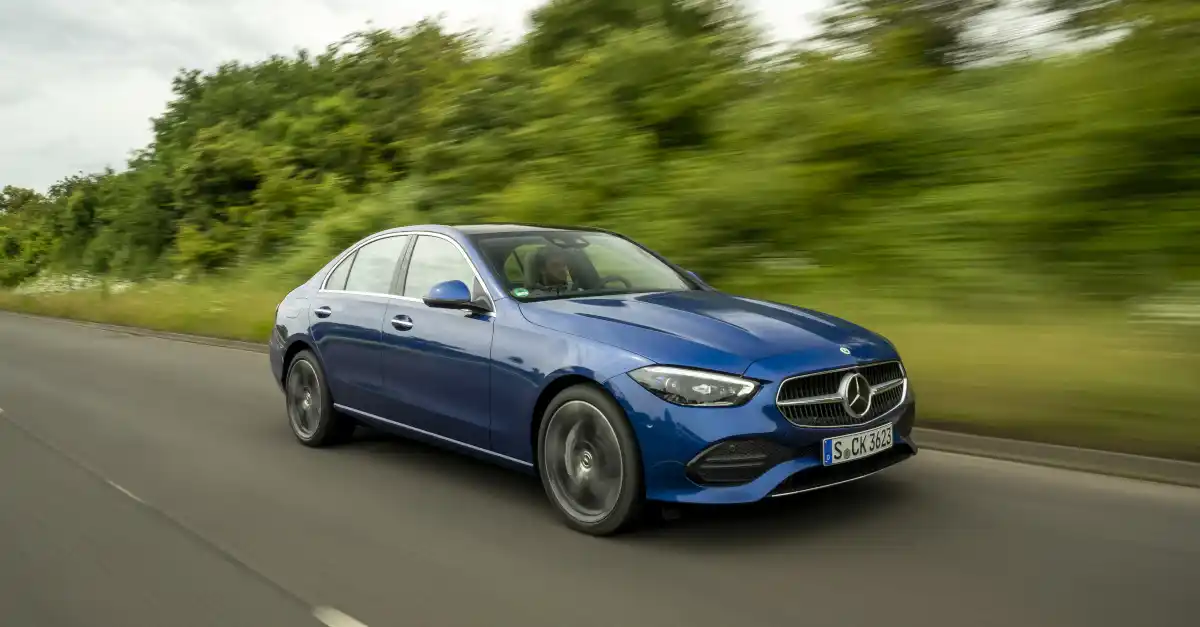
A buyer in Poland purchases a 2019 Mercedes-Benz C220d from the UK. The vehicle was manufactured and first registered in November 2019 — before Brexit. The buyer contacts auto-coc.eu, who runs a VIN check and confirms that a full EU COC is retrievable from Mercedes-Benz’s database. The COC for this technically non EU car (in 2026 terms) is delivered digitally within 48 hours for EUR 59. The vehicle is registered in Poland without any complications.
This is the best-case outcome for a COC for non EU car situation: a pre-Brexit UK vehicle with a retrievable EU COC, handled entirely through auto-coc.eu at minimal cost and maximum speed.
The question of whether you can get a COC for a non EU car does not have a single yes or no answer, but it does have a clear answer once you know the specifics of your vehicle.
What every COC for non EU car situation has in common is this: the process goes faster, smoother, and more affordably when you start with the right information.
auto-coc.eu provides that information for free, through its instant VIN check and expert consultation service. Whether your case is simple or complex, starting at auto-coc.eu means you never waste time or money pursuing the wrong solution.
Bookmark this guide as your go-to reference for COC for non EU car questions in 2026 and beyond. Share it with anyone importing a vehicle from outside the EU.
Enter your VIN, select your brand, and choose standard or express delivery.
Best price guaranteed · EU-compliant · Multilingual support