

Belgium occupies a unique position in the European vehicle remarketing landscape. As one of the EU’s most central countries with a highly developed logistics infrastructure and a large concentration of fleet operators, leasing companies, and insurance businesses, Belgium hosts a disproportionate volume of vehicle auction activity relative to its size. For buyers across Central and Eastern Europe, a Belgian car auction is often a source of well-priced fleet vehicles, insurance write-offs, and quality second-hand stock that would cost significantly more through a dealer in their home country.
The buying process is accessible, largely digital, and increasingly open to cross-border participants. But it comes with documentation specifics, VAT considerations, and COC realities that buyers need to understand before bidding. This guide covers all of it.
The Belgian car auction market is served by a mix of international platforms with local operations and domestic Belgian auctioneers. The major players include BCA Belgium, ADESA Belgium, and Copart Belgium — each with a slightly different focus and buyer profile.
BCA Belgium is the largest volume player and handles a mix of fleet returns, dealer trade-ins, and leasing company stock. The quality profile tends toward well-maintained vehicles with service history, and the documentation standards are generally reliable. BCA operates both physical auction halls and online bidding platforms.
ADESA Belgium, now part of the OPENLANE group, focuses strongly on the B2B fleet remarketing segment. Its stock is heavily weighted toward corporate fleet returns and leasing company vehicles, which brings the documentation and maintenance profile advantages described earlier in this guide. ADESA’s online platform is widely used by professional buyers across the EU.
Copart Belgium operates differently from both. Its primary inventory consists of insurance write-offs, flood-damaged vehicles, and total loss cars alongside a proportion of running, driveable vehicles. The pricing can be dramatically lower than BCA or ADESA, but the documentation situation and vehicle condition require a fundamentally different approach.
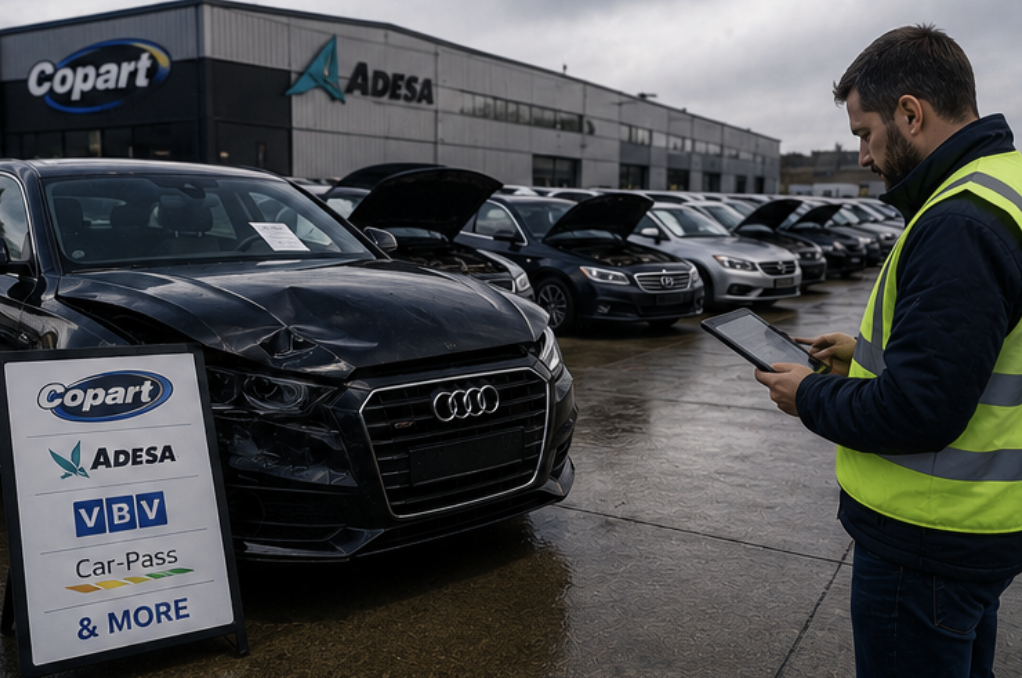
Most Belgian auction platforms distinguish between professional buyers — registered car dealers and businesses — and private buyers. The registration requirements and fee structures differ accordingly.
For private buyers, BCA and ADESA typically require identity verification, a valid payment method, and acceptance of the platform’s terms and conditions. Some sales are restricted to professional buyers only, and these restrictions are clearly indicated in the listing. Copart Belgium historically operated as a trade-only platform but has opened access to private buyers in recent years, with the caveat that private buyers pay a higher buyer’s premium than registered dealers.
For non-Belgian buyers, the registration process adds a cross-border layer. You will need to provide proof of identity in a format accepted by the platform, a billing address, and in some cases a Belgian or EU tax identification number if you are purchasing as a business. Most platforms have English-language registration flows alongside Dutch and French, reflecting the international composition of their buyer base.

The hammer price at a Belgian car auction is not the total cost of the vehicle. Every platform applies a buyer’s premium on top of the winning bid, expressed either as a percentage of the hammer price or as a fixed fee depending on the price band. BCA and ADESA buyer’s premiums typically range from 150 to 400 euros depending on vehicle value and buyer category. Copart’s premiums follow a percentage-based structure that increases with vehicle value.
Additional fees to budget for include transportation from the auction facility to your home country, which for a vehicle collected from Belgium and transported to Central or Eastern Europe typically costs between 200 and 600 euros depending on distance and transport method. If the vehicle requires transit plates for driving across borders, the cost and paperwork for these need to be arranged before collection.
VAT is applied at the Belgian rate on vehicles sold by VAT-registered sellers — primarily leasing companies and fleet operators. For private buyer purchases where Belgian VAT is charged, the VAT cannot typically be reclaimed and represents a real cost. For business buyers registered in another EU member state, the reverse charge mechanism may apply, shifting the VAT accounting obligation to the buyer’s home country. Confirm the VAT treatment of any specific purchase with both the auction platform and your accountant before bidding.
Belgium’s position as a major fleet vehicle market means that a large proportion of auction stock consists of leasing returns and corporate fleet vehicles. As covered earlier in this guide, the COC is frequently absent from the documentation packages of these vehicles for exactly the same reasons it is absent from leasing return vehicles generally.
At BCA Belgium and ADESA, the listing will indicate whether a COC is present. Where it is not listed as included, assume it is absent and plan accordingly. For Copart Belgium, which handles largely insurance write-off stock, the documentation situation is more variable and requires specific verification for each vehicle.
The absence of a COC from the auction documentation does not prevent the purchase but does require you to retrieve it before registration. For vehicles sold through Belgian auctions, auto-coc.eu covers the full range of makes and models commonly found in Belgian fleet stock, and the retrieval process can be initiated immediately after the auction using the vehicle’s VIN. Having the COC in hand before the vehicle arrives in your country of registration saves significant time at the registration stage.


Copart’s inventory requires a separate risk assessment framework from BCA or ADESA. Insurance write-off vehicles are sold in condition grades that indicate the extent of damage — from Category N vehicles with non-structural damage to more severely damaged vehicles requiring significant repair work.
The pricing reflects the damage level, and for buyers with access to affordable repair facilities, the economics can be attractive. The documentation implications, however, are substantial. A write-off vehicle that has been repaired and is being re-registered will require a structural inspection in addition to standard documentation checks in most EU countries. The COC must still be present and valid, and the repair work must meet the applicable technical standards for the vehicle to pass inspection.
For cross-border buyers purchasing write-off vehicles at Copart Belgium, the calculation must include the cost of compliant repair, the cost of the structural inspection, and the realistic probability that the inspection passes before the registration process can complete. These are not insurmountable obstacles, but they are real costs that need to be factored into the bidding price.
Belgian auction facilities are concentrated in a belt running from Ghent through Brussels to Liège, with additional facilities in Antwerp and along the major logistics corridors. For buyers collecting vehicles personally or through a transport agent, the access and collection process is straightforward and well-organised at the major platforms.
Most platforms allow a collection window of five to ten business days after payment confirmation. Missing this window triggers storage fees that accumulate daily and can become significant if collection is delayed. Arrange transport in advance of the auction rather than after winning, so the logistics chain is ready to move the moment the vehicle is paid for.
For vehicles that cannot be driven — either because they are non-runners or because they lack valid plates for road use — enclosed or flatbed transport is available through multiple logistics providers who serve the Belgian auction market regularly and know the collection procedures at each facility.
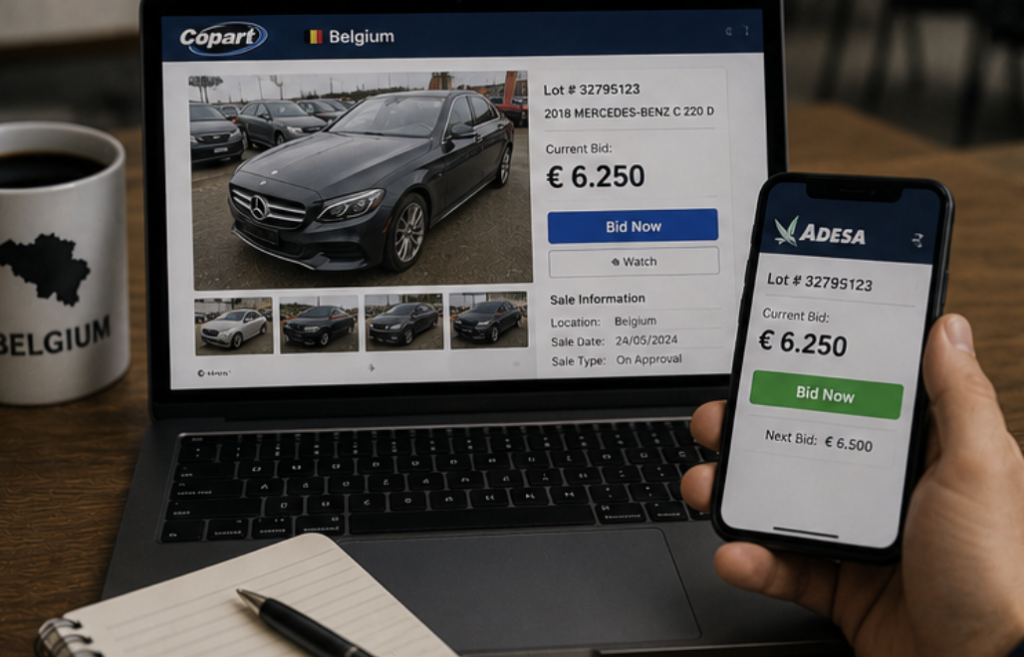
Before placing a bid on any vehicle at a Belgian car auction, work through a consistent pre-bid checklist. Run a VIN check at auto-coc.eu to confirm basic vehicle data and establish whether a COC is retrievable. Review the condition report carefully and note every damage item, understanding that the report covers cosmetic damage and not mechanical condition.
Confirm the VAT treatment of the specific vehicle and factor the total cost including buyer’s premium, VAT, and transport into your maximum bid. Establish whether the COC is included in the documentation and if not, add the retrieval cost to your budget. For Copart vehicles, assess the damage category honestly and include realistic repair costs in your total cost calculation.
Official, manufacturer-issued certificates for 90+ brands.
Express delivery available — PDF sent immediately upon processing.
Browse All COCs →Enter your VIN, select your brand, and choose standard or express delivery.
Best price guaranteed · EU-compliant · Multilingual support


