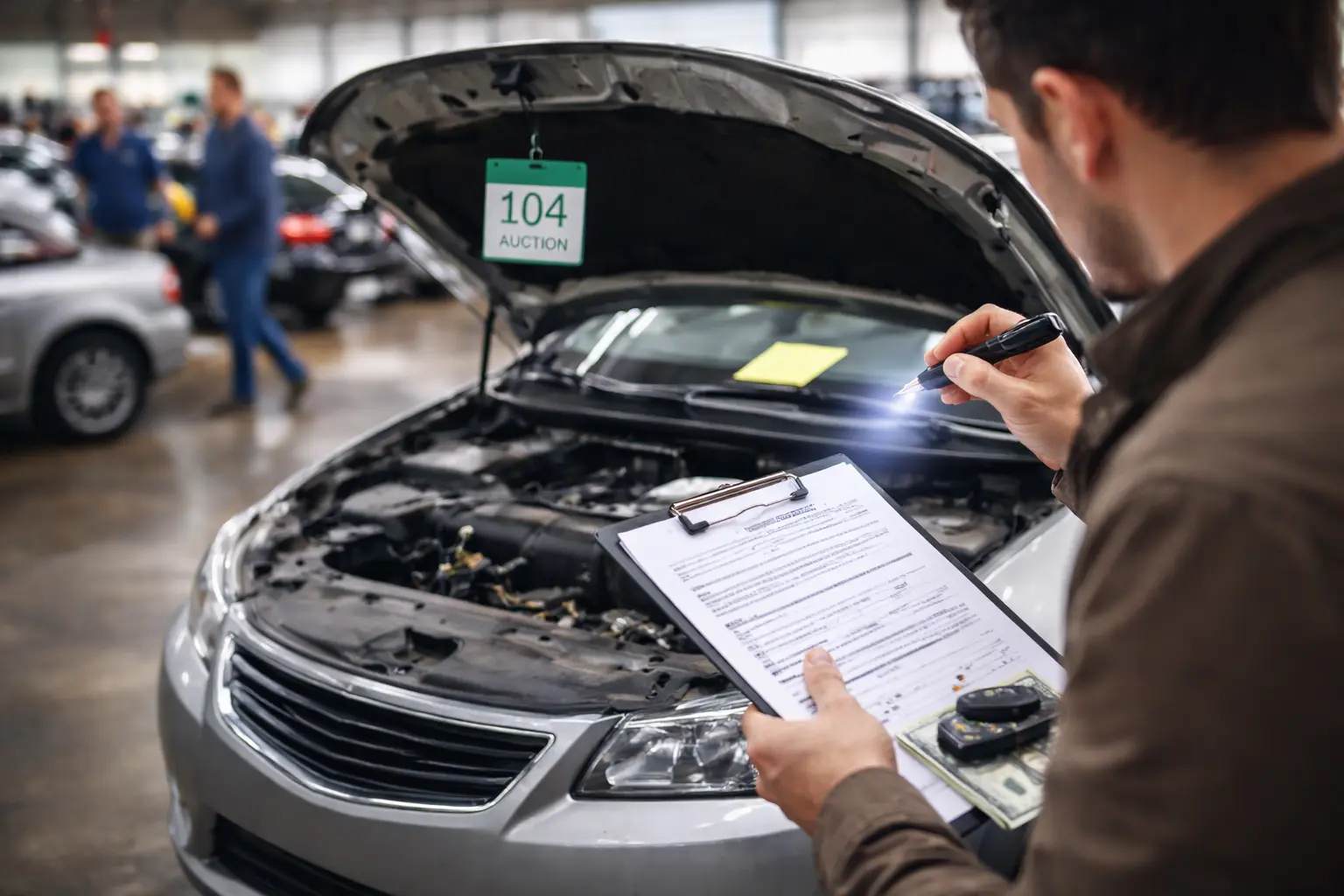
Buying a Car at Auction: What You Must Check Beforehand? A Practical Guide for Safer Bidding

Written by

I. Constantin

Date released

12.03.2026

Comments

0 so far - be the first!

For many buyers, buying a car at auction offers an opportunity to purchase vehicles significantly below market value. Auctions can include cars from insurance companies, leasing firms, dealerships, and fleet operators. With the right strategy, buying a car at auction can result in substantial savings.

However, auctions also carry higher risks than traditional purchases. Many vehicles sold through auction platforms come with limited guarantees, minimal inspection opportunities, and incomplete information. That is why anyone considering buying a car at auction must understand what to verify before placing a bid.

Before buying a car at auction, buyers should verify the vehicle history, inspect available documentation, understand the auction listing details, and check the VIN record. These steps help reduce the risk of hidden damage, mileage fraud, or ownership complications.

Why Many Buyers Are Interested in Buying a Car at Auction?

The main reason people consider buying a car at auction is price. Vehicles are often sold below retail value, particularly when insurance companies dispose of damaged vehicles or leasing companies rotate fleet inventory.

Another advantage of buying a car at auction is access to vehicles that may not yet appear on traditional used car markets. Some buyers also specialize in buying a car at auction as a business model, purchasing vehicles for repair and resale.

But the potential savings only materialize when buyers properly evaluate the risks involved.

Buy a VIN check for less.
Same full report you would receive from carVertical – just cheaper. 19,99€ instead of 29,99€.

The Main Risks When Buying a Car at Auction

While buying a car at auction can be profitable, auctions also sell vehicles with limited transparency. Listings may include minimal descriptions or only partial damage reports.

Some common risks when buying a car at auction include:

  • vehicles previously declared total loss

  • undisclosed accident damage

  • mileage rollback

  • incomplete service history

  • missing ownership documentation

  • vehicles imported from other countries with unclear records

These issues are not necessarily fraudulent. Many auction vehicles simply come with incomplete information. That is why proper verification is essential when buying a car at auction.

Step 1: Always Verify the VIN Before Buying a Car at Auction

One of the most important steps before buying a car at auction is verifying the VIN (Vehicle Identification Number). The VIN acts as a unique identifier for the vehicle and allows access to its historical records.

Running a VIN check can reveal information that is not always visible in the auction listing. Even professional buyers rely on VIN reports when buying a car at auction.

You can verify the VIN quickly here. A VIN report can reveal:

  • accident and damage history

  • insurance claims

  • ownership changes

  • odometer inconsistencies

  • salvage or total loss records

  • cross-border import history

Before committing to buying a car at auction, verifying this information can prevent costly mistakes.

Check Any Vehicle Before You Buy

Run a VIN check and discover accident history, mileage issues, ownership records and more.

Instant reports · Same data sources · Better price than ordering directly

About Auto-COC.eu VIN Check: Our VIN check service helps buyers verify a vehicle’s real history before purchase. Reports include accident records, insurance damage claims, previous ownership data, mileage verification, salvage or total-loss status, and import history. This allows you to make an informed decision before buying a used vehicle. For questions about a report or a specific VIN, contact our team at office@auto-coc.eu.

Step 2: Understand the Auction Listing Details

Auction platforms usually provide a listing page with basic information about the vehicle. However, buyers should carefully analyze every detail before buying a car at auction.

Important details in auction listings include vehicle condition reports, damage classifications, and photographs. Small notes in the listing description can indicate significant structural issues.

Understanding these details helps reduce uncertainty when buying a car at auction, especially when the vehicle cannot be inspected in person before bidding.

Step 3: Analyze the Vehicle Damage Category

Many vehicles sold through auctions have been previously damaged. Insurance companies often sell vehicles after accidents once repair costs exceed a certain threshold.

Before buying a car at auction, it is important to understand how damage categories affect future repairs and resale value.

Common categories may include:

  • cosmetic damage

  • minor accident repair

  • structural damage

  • salvage vehicles

  • flood or water damage

Each category carries different repair costs and risks. Experienced buyers always evaluate these factors before buying a car at auction.

Step 4: Estimate the Real Cost Before Buying a Car at Auction

The winning bid is rarely the final cost. When buying a car at auction, buyers must account for several additional expenses.

Typical costs after buying a car at auction include:

  • auction platform fees

  • broker commissions

  • vehicle transport

  • import duties or taxes

  • mechanical repairs

  • registration and inspection costs

Without calculating these expenses, buying a car at auction can quickly become more expensive than purchasing a similar vehicle on the regular used car market.

Step 5: Confirm Ownership and Documentation

Another critical step when buying a car at auction is confirming the legal documentation attached to the vehicle.

Auction vehicles sometimes come with incomplete paperwork, which can complicate registration in your country. Buyers should verify title status, ownership history, and export eligibility.

Ensuring proper documentation is essential before buying a car at auction, especially for vehicles imported across borders.

Frequently Asked Questions

Often yes. Buying a car at auction can provide lower purchase prices, but additional costs like transport and repairs must be considered.
Buying a car at auction can be safe if you verify the VIN history, inspect available documentation, and understand the vehicle condition before bidding.
Before buying a car at auction, verify the VIN history, analyze damage categories, estimate total costs, and confirm ownership documentation.
Not always. Some vehicles sold through auctions are lease returns or fleet vehicles, but many buyers still verify details before buying a car at auction.
Some auctions allow inspections, while others only provide photos and condition reports.
The safest approach is to run a VIN history report at https://auto-coc.eu/check-your-vin/ before buying a car at auction.

Final Thoughts Before Buying a Car at Auction

Buying a car at auction can be a smart strategy for buyers who understand the process and verify the vehicle carefully.

The key to success is research. Inspect the listing, estimate total costs, and always verify the vehicle history before placing a bid.

Before buying a car at auction, run a VIN check here.

This simple step can reveal hidden problems and help you make a more informed bidding decision.

Buy a VIN check for less.
Same full report you would receive from carVertical – just cheaper. 19,99€ instead of 29,99€.

Other posts you might like

Want a fast & cheap COC? Find yours now!