

Written by
I. Constantin

Date released
20.06.2026
Comments
0 so far - be the first!
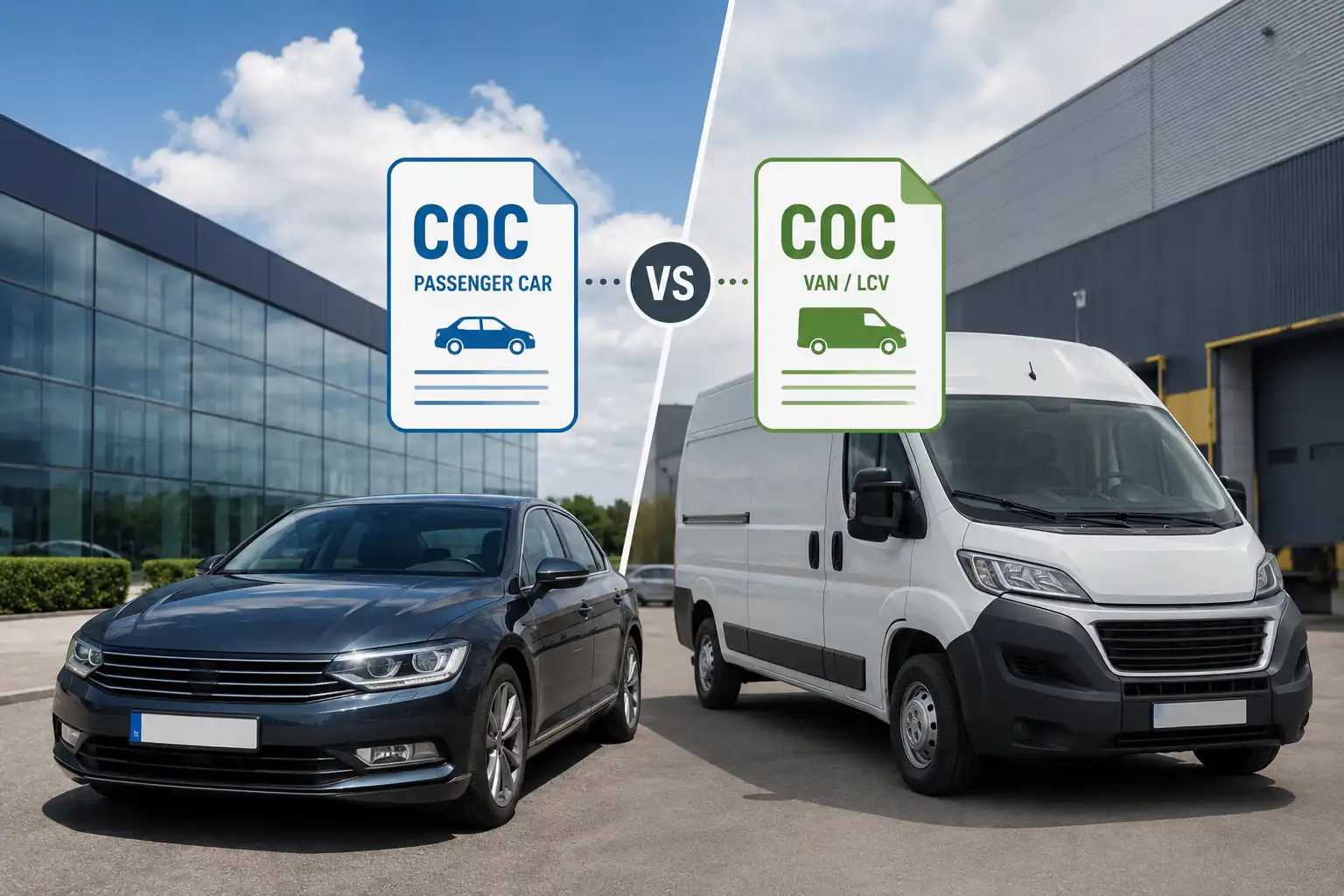
Light commercial vehicles occupy a significant and growing share of the European cross-border vehicle market. Vans, pickups, and commercial derivatives are bought, sold, and imported across EU borders in large volumes, driven by a combination of competitive pricing in Western European markets and strong demand from businesses and tradespeople across Central and Eastern Europe. The registration process for these vehicles follows the same general framework as passenger cars, but the COC structure and the type approval framework behind it are different in ways that matter practically.
If you are buying a used van or light commercial vehicle from another EU country and planning to register it at home, understanding how the LCV COC differs from a passenger car certificate will save you time, money, and unnecessary surprises at the registration desk.
The starting point for understanding any van or LCV COC is the EU vehicle category system. Passenger cars are classified as M1 vehicles — motor vehicles with at least four wheels designed to carry passengers, with no more than eight seats in addition to the driver’s seat. Light commercial vehicles fall under the N1 category — motor vehicles with at least four wheels designed for the carriage of goods, with a maximum mass not exceeding 3,500 kg.
This distinction is not just administrative. The N1 category has its own type approval framework, its own set of applicable technical directives, and its own COC document structure. The fields on an N1 COC reflect the commercial purpose of the vehicle and include data points that simply do not appear on an M1 passenger car certificate.
Understanding that your van’s COC operates under the N1 framework is the first step to reading the document correctly and understanding what your registration authority is checking when they review it.
The core of the COC document covers the same ground for both categories: VIN, make, model, type approval number, engine specifications, and emissions data. The differences emerge in the fields specific to commercial vehicle classification and use.
Payload and load capacity data feature prominently on an N1 COC in a way that is absent from passenger car certificates. The document states the vehicle’s maximum technically permissible laden mass (MTPLM), the maximum permissible load on each axle, and the resulting maximum payload. These figures are used by registration authorities to classify the vehicle for road tax, toll, and overloading regulation purposes.
Body type classification on an LCV COC covers a wider range of configurations than M1 certificates. A panel van, a platform cab, a tipper body, and a dropside are all distinct body type entries that reflect the commercial versatility of N1 vehicles. If the body type stated on the COC does not match the physical vehicle — because the body was replaced or modified after original registration — this discrepancy will be identified during inspection and will require resolution before registration proceeds.
Towing capacity and trailer coupling specifications appear on many LCV COCs as commercially relevant data that buyers and registration authorities need. These figures affect the vehicle’s road legality when used for towing, which is a common commercial use case.

One of the most common complications in LCV registration is the converted vehicle. A panel van that has been converted to carry passengers, fitted with windows, seats, and seat belts in the cargo area, has been physically transformed from an N1 commercial vehicle into something that functions as an M1 passenger vehicle or an M1G people carrier. But the COC still says N1.
This conversion creates a direct conflict between the physical vehicle and its documentation. The COC describes a commercial vehicle. The vehicle sitting in front of the inspector has been modified for passenger use. Registration authorities across the EU handle this situation differently, but the common thread is that the original N1 COC is no longer an accurate description of the vehicle as it exists.
In some cases, a conversion carried out by a specialist converter who holds their own type approval for the conversion can be registered with supplementary documentation alongside the original N1 COC. In other cases, the conversion triggers a requirement for re-categorisation and a new type approval for the converted vehicle. The specific rules depend on the destination country, the extent of the conversion, and whether the converter held the appropriate approvals.
Before purchasing a converted van, establish definitively how the conversion will be treated by your national registration authority. Do not assume that what passed registration in the selling country will pass automatically in your country.
The growing market for electric light commercial vehicles adds another layer of complexity to the LCV COC picture. An electric van carries the same additional fields as an electric passenger car — battery capacity, WLTP range, charging specifications — but within the N1 category framework rather than M1.
For buyers importing used electric vans from other EU countries, the combination of N1-specific COC requirements and EV-specific technical data means the document contains significantly more information than a conventional petrol or diesel van COC. Cross-referencing all of this against the physical vehicle requires more attention to detail, and discrepancies in any field can create registration problems.
Range anxiety is also a more acute practical concern for commercial buyers than for passenger car buyers, and the WLTP figures on the COC for an electric van need to be treated with the same caution as those for passenger EVs. Real-world range under load is typically significantly lower than the WLTP figure, and this affects the commercial utility of the vehicle in ways that buyers need to assess independently of the COC data.
The retrieval process for an LCV COC follows the same pathway as for passenger cars. Manufacturer or importer channels, dealer networks, and specialist platforms all provide this service for N1 vehicles. The difference is that the commercial vehicle market has historically been even less attentive to COC retention than the passenger car market — fleet operators, leasing companies, and trade buyers rarely retain the document after original registration.
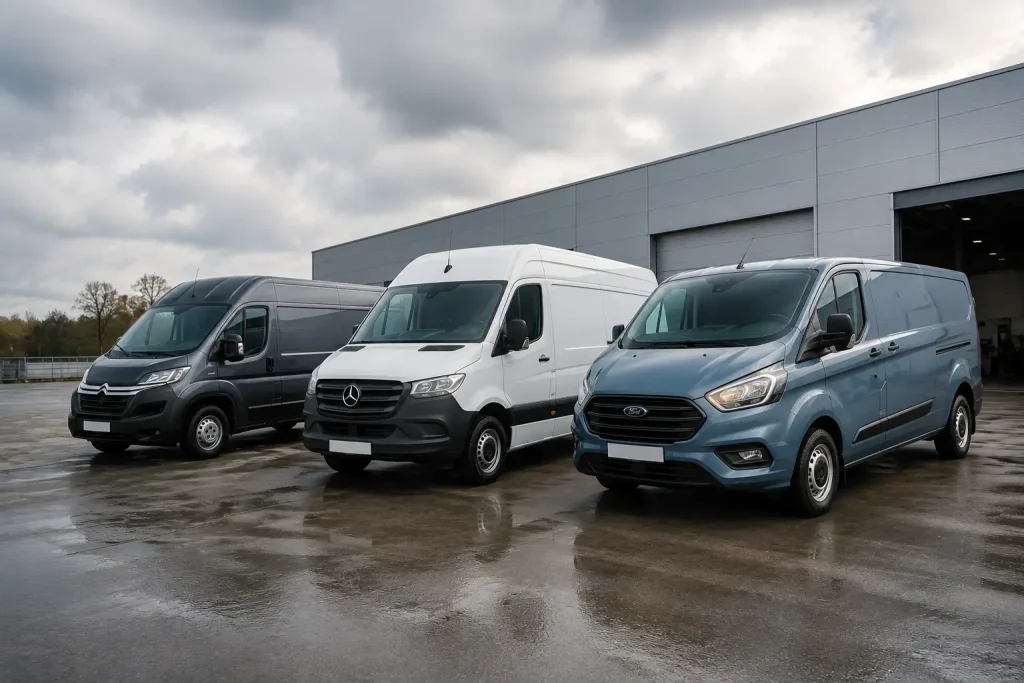
For the most popular light commercial vehicle platforms — Ford Transit and Custom, Mercedes Sprinter and Vito, Volkswagen Transporter and Crafter, Renault Trafic and Master, Peugeot Boxer, and Citroën Jumper — auto-coc.euprovides a fast and reliable retrieval service. Submit the VIN and the platform retrieves the document from manufacturer databases, covering both panel vans and the full range of body derivatives common in the European commercial vehicle market.
Official, manufacturer-issued certificates for 90+ brands.
Express delivery available — PDF sent immediately upon processing.
Browse All COCs →Enter your VIN, select your brand, and choose standard or express delivery.
Best price guaranteed · EU-compliant · Multilingual support


