
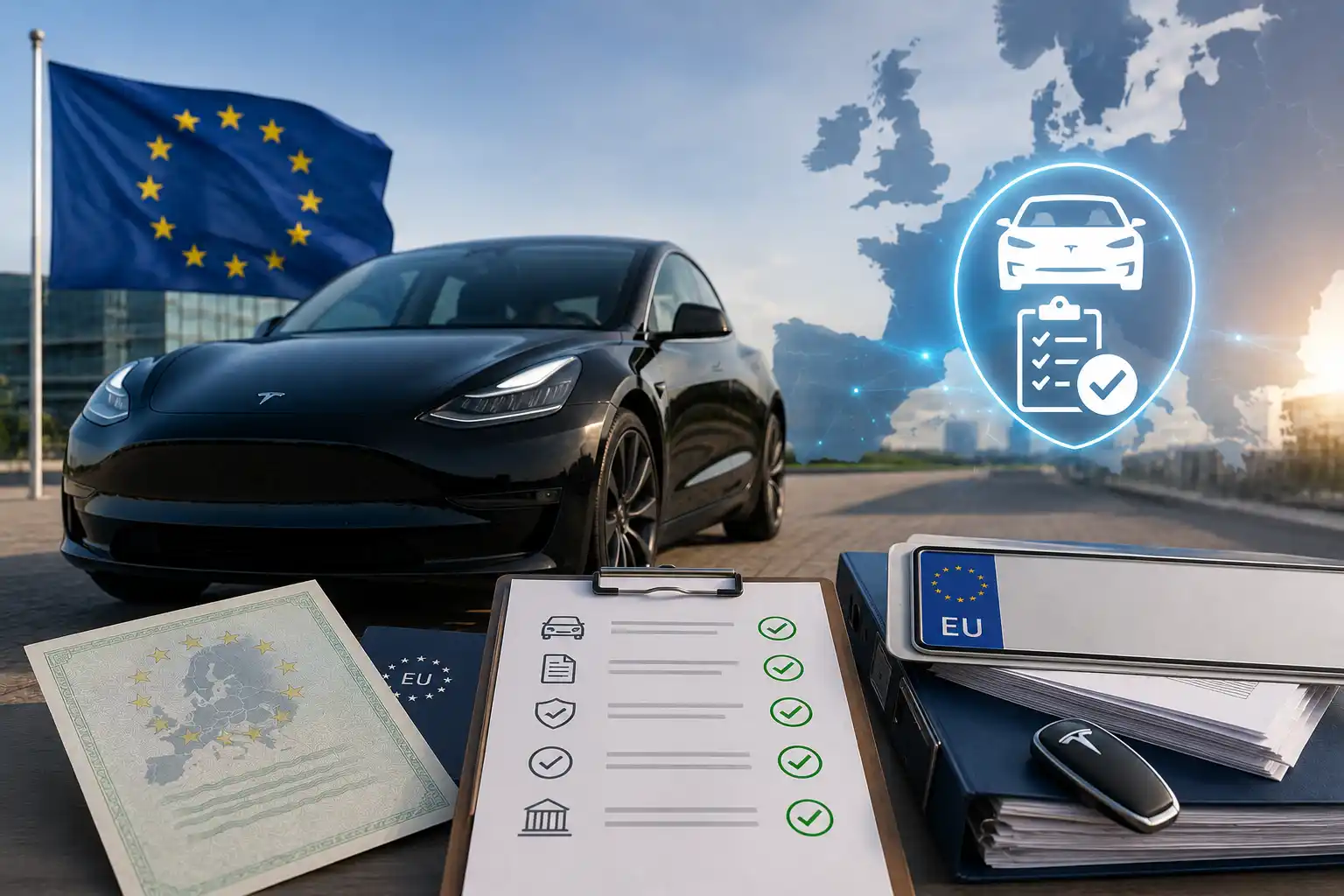
Tesla is the most searched electric vehicle brand across Europe’s used car market, and for good reason. A two or three year old Model 3 or Model Y offers compelling value compared to its new price, and the combination of low running costs and high reliability ratings makes it one of the most rational used car purchases available today. But registering a used Tesla acquired from another EU country involves a set of complications that do not apply to most conventional vehicles, and buyers who discover these complications at the registration desk rather than before the purchase are the ones who end up with unexpected costs and delays.
This guide covers the complete registration process for a used Tesla in the EU, with specific attention to the COC question that trips up more buyers than any other single issue.
The differences begin with Tesla’s business model and extend through every stage of the ownership and documentation process. Unlike every established car manufacturer, Tesla sells directly to consumers without a traditional dealer network. There are no franchised Tesla dealers who hold stock, manage documentation, and handle administrative requests for previous customers. Every interaction with Tesla goes through Tesla itself — the company’s website, its service centres, and its customer support infrastructure.
For registration purposes, this creates a specific challenge. When a buyer needs a COC for a BMW or a Volkswagen, they can walk into any authorised dealer in their country, show the VIN, and initiate a request through an established channel that dealers handle routinely. For a Tesla, that pathway does not exist. The request has to go to Tesla directly, and Tesla’s responsiveness to COC requests from third parties — meaning anyone other than the original buyer — has historically been inconsistent.
Understanding this upfront shapes how you approach the entire registration process.

Every Tesla sold through official European channels has received EU type approval and has an associated COC. The document exists. The question is how to obtain it when the seller no longer has it — which is frequently the case, since many Tesla owners in countries with simple registration processes never needed to handle the COC themselves.
Tesla’s EU type approvals cover its vehicle models by market region and software version band, which introduces a complexity absent from most conventional vehicles. A Model 3 sold in Germany may have a slightly different type approval reference than the same model sold in Norway or the Netherlands, depending on the specification and the production period. This means the COC retrieval process requires accurate vehicle data beyond just the VIN — the production date and the specific market configuration matter.
For most buyers, the fastest route to a Tesla COC is through auto-coc.eu. The platform has established retrieval pathways for Tesla vehicles and can obtain the document significantly faster than going through Tesla’s general customer support, which routes requests through multiple departments before producing an outcome. Submit the VIN and relevant vehicle details, and the platform handles the rest.


Tesla’s over-the-air software update system is one of the brand’s most celebrated features and one of its most complex registration implications. Since the vehicle’s software is continuously updated, parameters that were stated on the original COC — including power output figures in some cases — may have changed since the document was first issued.
For most registration scenarios, this does not cause a practical problem. Registration authorities across the EU assess the vehicle against the type approval on record, and minor software updates do not trigger re-approval requirements. The issues arise in specific circumstances: when a software update has materially altered a performance parameter that features prominently on the COC, or when a national authority is conducting a particularly detailed technical review.
The most commonly cited example involves Tesla’s power upgrade subscriptions, through which owners can pay to unlock additional performance. A vehicle sold with an active power upgrade may show performance figures on a test that exceed what the original COC states as the maximum. If a registration inspector notices this discrepancy, they may request clarification or additional documentation. Having the most current available COC — rather than the original document from the vehicle’s first registration — reduces the risk of this becoming a problem.
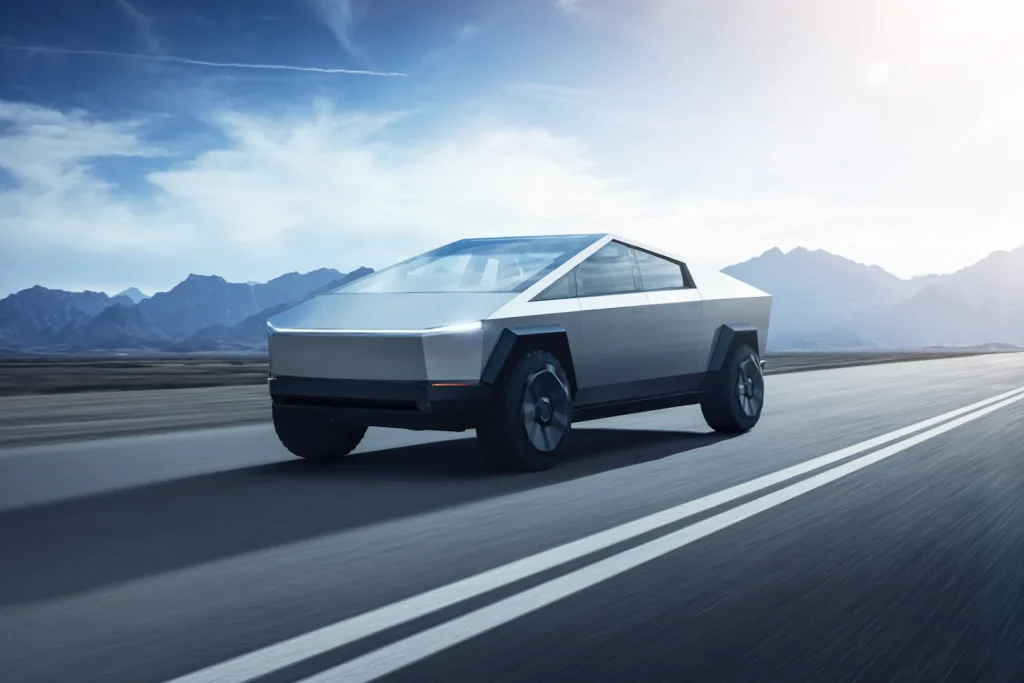
Tesla’s warranty covers battery replacement under specific degradation thresholds, and the brand’s service network has replaced batteries in a meaningful number of vehicles as the fleet ages. A battery replacement can affect the COC situation in a way that buyers of used Teslas need to understand.
If the replacement battery is identical in specification to the original — same chemistry, same capacity, same thermal management system — the original COC remains technically valid. If the replacement involves a different battery generation, which has occurred as Tesla has updated its technology across production runs, the specifications stated on the original COC may no longer accurately reflect the vehicle.
In practice, most EU registration authorities do not have the technical tools to verify battery chemistry during a standard inspection, and this issue rarely causes active problems at registration desks. However, it is worth being aware of for the resale market and for any future technical inspection that involves emissions or energy consumption verification.
Before purchasing a used Tesla, ask the seller whether any warranty service or battery work has been carried out, and request Tesla service records through the Tesla app if the seller can provide access. A VIN check at auto-coc.eu gives you a baseline of the vehicle’s official specifications to compare against.
The registration process for a used Tesla follows the same general pathway as any other imported vehicle, with the Tesla-specific steps inserted at the appropriate points.
Before purchasing, run a VIN check to confirm the vehicle’s basic data and verify that a COC is retrievable. Confirm with the seller whether they have the original COC. If they do, request it as part of the sale. If they do not, initiate a COC retrieval through auto-coc.eu using the VIN before completing the purchase.
After purchasing, ensure the vehicle is deregistered in its country of origin and obtain the deregistration confirmation. This is handled through the national vehicle registration authority of the selling country — in Germany the Kraftfahrtbundesamt system, in the Netherlands the RDW, in Belgium the DIV. The process is straightforward for the seller or their agent, and the resulting document is a required part of your registration package.
With the COC, the deregistration confirmation, the purchase documentation, and proof of identity and address, you are equipped for a registration appointment with your national vehicle authority. Tesla-specific additional steps — such as verifying the vehicle’s charging compatibility with local infrastructure or registering with Tesla’s European service network — are administrative rather than registration-critical and can be handled after the vehicle is legally on the road.
Official, manufacturer-issued certificates for 90+ brands.
Express delivery available — PDF sent immediately upon processing.
Browse All COCs →One practical complication that applies specifically to electric vehicles, including Teslas, is the insurance gap during the period between purchase and registration. Most standard vehicle insurance policies require a registration number, which creates a circular problem: you cannot register without certain inspections, you cannot legally drive to inspections without insurance, and you cannot easily get insurance without registration.
The solution is a transit or temporary insurance policy, which most major European insurers offer for exactly this scenario. Arrange this before collecting the vehicle, confirm it covers the specific journey and any necessary inspection visits, and keep the policy documentation with the vehicle during transit.
Enter your VIN, select your brand, and choose standard or express delivery.
Best price guaranteed · EU-compliant · Multilingual support


