
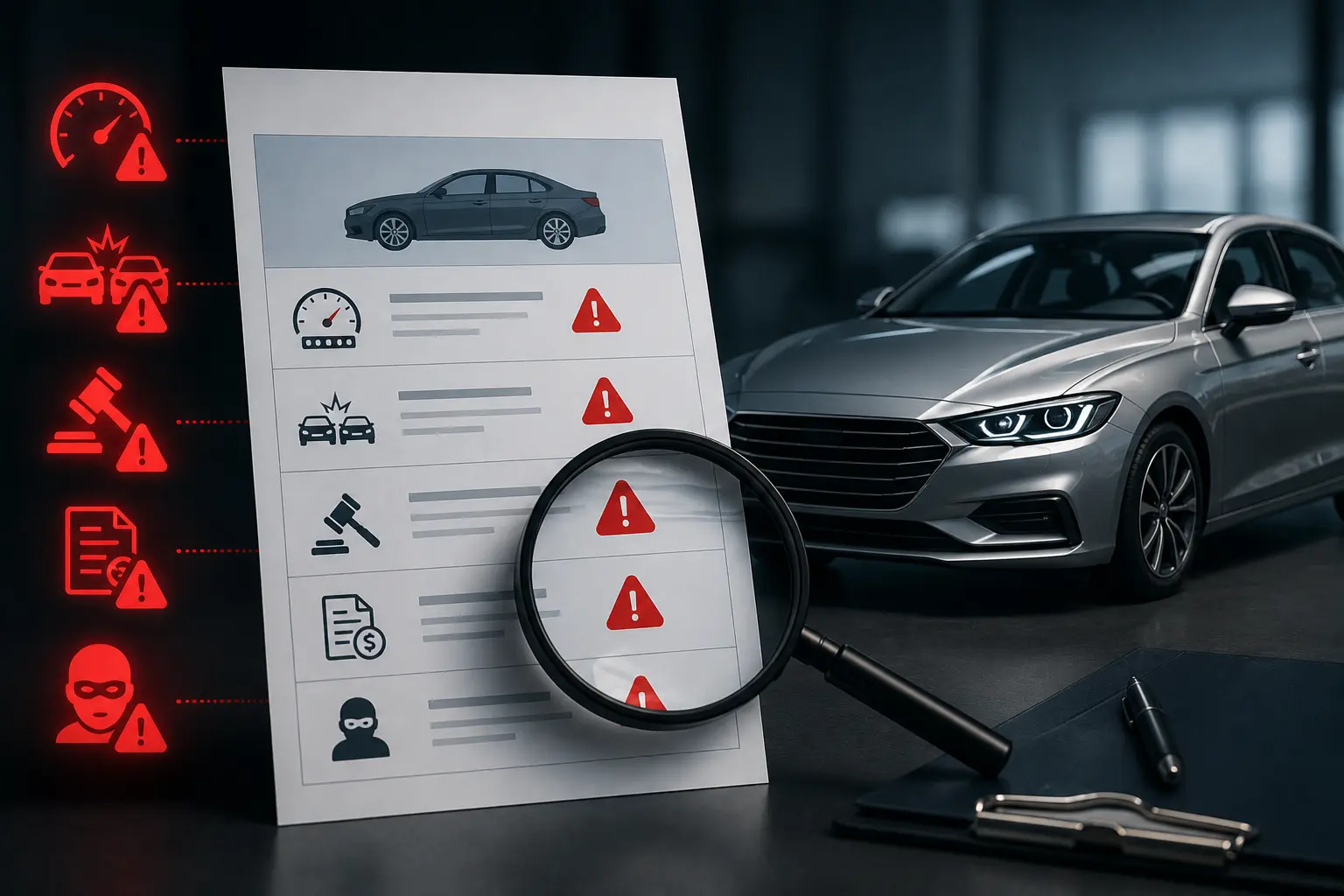
A vehicle history report feels like due diligence done. You paid for it, you downloaded it, you scrolled through it, and nothing jumped out screaming danger. So the car must be fine. This is the mistake that costs buyers thousands of euros every year — not because the reports are inaccurate, but because the signals that matter most are subtle, easy to rationalise, and routinely overlooked by buyers who do not know precisely what they are looking for.
Here are five red flags that appear regularly in vehicle history reports and that most buyers either miss entirely or consciously decide to ignore. Understanding what each one actually means will change how you read every report you encounter going forward.
Odometer fraud is the most prevalent form of deception in the used car market, and vehicle history reports are the primary tool for detecting it. Most buyers understand this and scan the mileage history looking for obvious reversals — a car recorded at 150,000 km suddenly showing 80,000 km in a later entry. These blatant reversals are easy to spot and relatively rare, because sellers who invest in odometer fraud are generally sophisticated enough to avoid leaving that kind of obvious trace.
What buyers routinely miss is the gap. A vehicle that shows 45,000 km at a 2019 inspection, then disappears from any recorded data point until 2022 when it appears at 68,000 km has a three-year window during which anything could have happened to the odometer. The absence of data is not the same as the absence of fraud. It simply means the fraud, if it occurred, happened during a period when the vehicle was not passing through inspection or service systems that feed into the history database.
When you see a significant time gap with no recorded mileage data points, treat it as a question that needs answering, not as a neutral entry. Ask the seller directly what was happening with the vehicle during that period, request any documentation from those years, and consider whether the mileage progression before and after the gap is plausible given the vehicle’s age and typical usage patterns for its category.
A vehicle that has been registered in three different EU countries within two years is not automatically suspicious. Expatriate workers move, company fleets cross borders, and legitimate arbitrage buying happens across the EU’s open single market. But a pattern of rapid country-hopping is also one of the most reliable signatures of a vehicle that has been through an insurance write-off process in one country and is being laundered through successive registrations to obscure its history before sale.
The mechanism is straightforward. A vehicle is written off as a total loss in Germany, paid out by the insurer, and sold to a salvage buyer. The salvage buyer repairs it and sells it into Poland. In Poland it gets a clean registration with no reference to the German write-off, because cross-border write-off data sharing, while improving, remains incomplete. The vehicle then moves to Belgium, gets registered again, and is sold to an end buyer whose history report shows two previous EU registrations but no accident record because the original write-off never made it into the shared database.
The more countries a vehicle has passed through, particularly in a short timeframe, the higher the probability that at least one significant event in its history is not captured in any accessible database.
Vehicle history reports typically show both the number of previous owners and the number of registration events. Most buyers look at the owner count and stop there. The registration event count tells a more nuanced story that is worth examining separately.
A vehicle showing three previous owners but seven registration events has been through administrative processes that are not fully explained by ownership changes alone. Temporary registrations, re-registrations after import, registrations under dealer or fleet management names that are technically distinct from end-user ownership — all of these can inflate the registration event count beyond the owner count. Some of these explanations are entirely benign. Others are consistent with a vehicle that has been repeatedly recycled through the market to obscure elements of its history.
Cross-reference the registration event dates against the mileage progression and the country history. If the pattern makes sense — consistent mileage growth, logical geographic movement, plausible ownership durations — the discrepancy is probably administrative rather than sinister. If the pattern does not cohere, dig deeper before proceeding.
Accident and damage records in vehicle history reports come primarily from insurance claims. When a vehicle is involved in an accident and the damage is processed through an insurer, the event is typically recorded and eventually feeds into history databases, though with varying completeness across EU countries.
What buyers often miss is the absence of what should logically follow an insurance event. A recorded insurance claim that is not followed by any workshop visit, authorised repair record, or subsequent inspection in a reasonable timeframe is a red flag. It suggests one of two things: either the repair was carried out outside the formal workshop system — in a backyard or by an uncertified repairer — or the vehicle was declared a total loss, paid out, and then sold into the market as a repaired vehicle without any formal repair documentation.
Both scenarios have serious implications. Informal repairs on accident-damaged vehicles can leave structural integrity compromised in ways that are invisible to casual inspection and that only become apparent in a subsequent collision. A vehicle that passed through a total loss process and was subsequently repaired without documentation has no verifiable repair standard attached to it.
When you see an insurance event in the report without a credible follow-up repair trail, request a professional structural inspection before proceeding. This is not optional — it is the only way to establish whether the repair, documented or not, was done to an acceptable standard.
Before you buy a used car, verify its real history.
Accidents, insurance claims, mileage issues and more — revealed in seconds.
This is the red flag that feels like a green flag, which is precisely why it is so dangerous. A vehicle with 200,000 km on the clock and a perfectly clean history report — no accidents, no damage, consistent mileage, single owner — reads as reassuring. The car has had a hard life but apparently an honest one, and the history backs it up.
The issue is survivorship bias combined with database coverage limitations. A perfectly clean report on a heavily used vehicle does not mean nothing bad has ever happened to it. It means nothing bad that was reported to an insurer, recorded by an inspection authority, or captured by a workshop system has happened to it. Mechanical wear, unreported minor accidents, private repairs, and issues that the owner chose to absorb personally rather than claim through insurance leave no trace in any history report.
For high-mileage older vehicles, a clean history report should trigger more scrutiny at the physical inspection stage, not less. The absence of recorded problems means the problems, if any, will only be found by a mechanic with the car on a lift — not by any database.
Official, manufacturer-issued certificates for 90+ brands.
Express delivery available — PDF sent immediately upon processing.
Browse All COCs →Run a VIN check and discover accident history, mileage issues, ownership records and more.
Instant reports · Same data sources · Better price than ordering directly


Written by
I. Constantin

Date released
12.03.2026
Comments
0 so far - be the first!
You’ve bought a car (or you’re about to) and you need a Certificate of Conformity. The first question most people ask is simple: how long will it take? The honest answer is: it depends. But the variables are predictable, and once you understand them, you can plan accordingly and avoid the most common delays.
This article walks you through the full COC timeline, from the moment you place an order to the moment the document is in your hands, and explains exactly what affects processing speed for each vehicle brand.
There are two delivery paths for a COC through Auto-COC.eu, and the difference in timing is significant:
Regardless of which delivery option you choose, Auto-COC.eu sends a DIGITAL PDF COPY OF YOUR COCas soon as the document is processed. Many registration authorities in EU countries accept the PDF for the initial registration steps, meaning you don’t necessarily have to wait for the physical document to arrive before you can begin the process.
Here is what happens between placing your order and holding the certificate in your hands. Understanding each stage helps you set realistic expectations — and spot where things might slow down.


The single biggest variable in COC processing time is the vehicle manufacturer. Different brands have different systems, response times, and administrative processes. Here are all the factors that play a role:
The table below gives a general indication of typical processing times at the manufacturer stage for the most popular brands. These are averages — individual orders may be faster or slower depending on the factors above.
If you’re working towards a registration deadline, there are concrete steps you can take to minimise waiting time at every stage of the process.
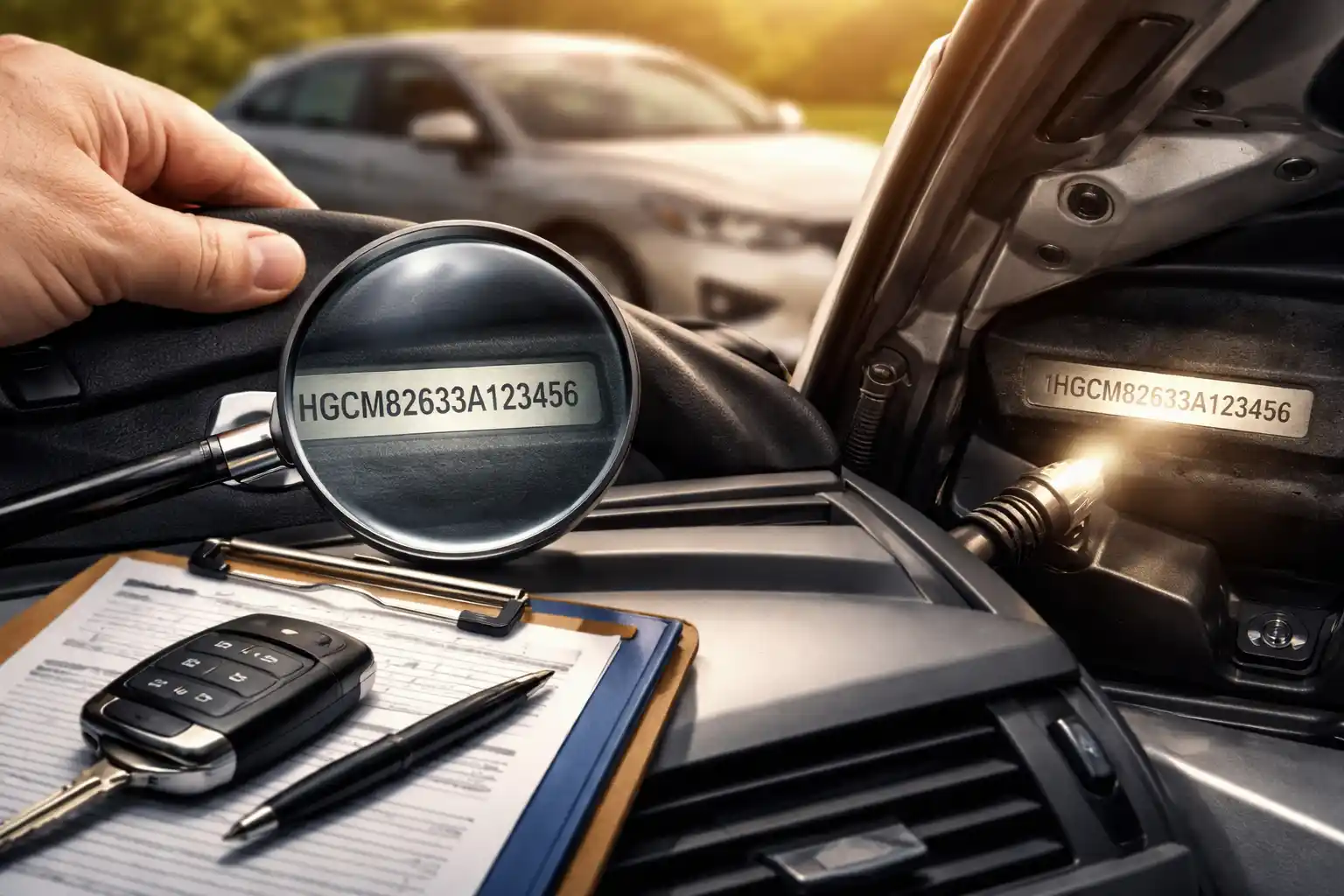
The fastest single thing you can do is get the VIN right first time. A wrong VIN means a delay while the error is identified and corrected. Verify it on the dashboard, door jamb, and registration document — all three should match.
For just €19.90 extra, your certificate ships via FedEx or UPS rather than standard post. On standard shipping, a 3-day processing time can easily become a 10-day total wait once postal transit is included. Express shipping dramatically compresses the delivery leg of the timeline.
Orders placed early in the working week are processed and dispatched faster. An order placed Thursday afternoon, for example, may sit in the queue over the weekend even if processing is quick, effectively adding 2 days to your wait.
The moment your COC is processed, you’ll receive a digital PDF by email. Many EU registration authorities accept this for initial submission while the physical original is in transit. Check with your local registration office — this alone can save you days.
Official, manufacturer-issued certificates for 90+ brands.
Express delivery available — PDF sent immediately upon processing.
Browse All COCs →Occasionally, processing takes longer than usual. Here are the most common reasons — and what to do in each case.
This can happen if the VIN was entered incorrectly, or in rare cases where a vehicle’s records are stored under a slightly different identifier in the manufacturer’s system (common with some older or imported models). Auto-COC.eu will contact you to resolve the discrepancy.
Vehicles built to specification for a specific market (fleet contracts, diplomatic vehicles, special editions) occasionally require manual verification. This is uncommon but can add 1–3 business days.
Like any business system, manufacturer databases occasionally experience maintenance windows or unusually high request volumes — typically around end-of-year periods or after major product launches. These delays are outside anyone’s control, but Auto-COC.eu monitors them and will notify you if your order is affected.
For most people ordering a COC through Auto-COC.eu, the realistic total timeline from order to physical document in hand is 5–8 business days for standard delivery, or 4–6 business days with express. If you need to begin registration before the physical document arrives, the digital PDF sent upon processing gives you a head start.
The two things most within your control are: getting the VIN right first time, and choosing express delivery if timing is at all tight. Everything else is largely determined by the vehicle manufacturer — and Auto-COC.eu handles that part for you.
Enter your VIN, select your brand, and choose standard or express delivery.
Best price guaranteed · EU-compliant · Multilingual support


