5 cars you should think twice about buying in 2026
Written by
I. Constantin
Date released
24.11.2025
Comments
0 so far - be the first!
Thinking about changing your car in 2026 and already drowning in options? You are not alone. Between flashy ads, “last chance” offers and a mix of petrol, hybrid and electric choices, it is very easy to fall in love with the wrong car for the way you actually drive. Some models look like a good deal on paper, but can turn into money pits, stress or restrictions a few years down the road.
This is not at all about shaming brands. In this article we look at five types of cars you should think twice about in 2026 and why. If you understand the logic behind what to avoid, you will make a smarter choice no matter what badge is on the bonnet.
1. Old generation city cars that are being killed by regulations
Small, cheap petrol city cars are under huge pressure in Europe. Stricter safety and emission rules make them expensive to update, so manufacturers quietly stop investing in them or remove them from the range.
Typical examples in this category:
Older generation Fiat Panda and similar budget city cars
Aging small models that keep getting facelifts instead of a new platform
Why this is a problem in 2026:
Safety: Many of these models ride on old platforms with weaker crash performance compared to modern rivals.
Tech: Poor driver assistance systems, no proper lane keeping, basic infotainment, no over the air updates.
Resale value: When a model is clearly at the end of its life, resale value usually drops, and cities may get stricter with older engines.
If you need a compact car, look for a newer generation model, ideally with modern safety kit and a fresh platform, not something manufacturers are just keeping alive for one more year.
2. First generation electric cars with short range and slow charging
Early EVs were important, but many are now outdated. In 2026, you should be very careful with:
First wave electric hatchbacks and crossovers with real world ranges under 200 km
EVs that only have slow DC charging and no proper thermal management for the battery
Why to avoid them:
Range anxiety: What looked acceptable in 2016 or 2018 will feel painful in 2026, especially as newer EVs deliver 350 to 500 km realistic range.
Charging frustration: Old EVs that charge at 30 to 50 kW on DC will feel painfully slow on long trips.
Depreciation: As battery tech improves, old EVs with small packs and slow charging lose value fast.
If you want an EV, focus on newer models with a decent battery warranty, at least 11 kW AC and around 100 kW or more DC fast charging, plus a realistic range that fits your life.
3. Big diesel SUVs for pure city use
Diesel is not dead, but its place is shrinking. In 2026, large diesel SUVs that are used almost exclusively in cities are a bad idea for most people.
Who should be cautious:
Drivers who mostly do short trips, school runs and shopping in town
People who live in or near low emission zones or cities that plan to tighten diesel restrictions
Why they are risky:
DPF and EGR issues: Modern diesel engines do not like constant short trips. Soot builds up, regeneration cycles fail, and repair bills are high.
City access: More and more city centers restrict or plan to restrict older diesels. If rules tighten, your car may suddenly become less practical and less valuable.
Running costs: Insurance, tyres and maintenance on big SUVs are all higher, and you may not actually need the size or towing capacity.
If you do heavy motorway mileage, diesel can still make sense. If most of your driving is urban, a hybrid, petrol or electric alternative is usually smarter in 2026.
4. Cheap new cars with almost no safety equipment
There will always be brands and models that advertise very low prices. The catch is often hidden in what is missing.
Be careful with:
Budget models that skip important active safety features to keep the list price attractive
Cars that have poor crash test scores when you check independent tests
Red flags:
No automatic emergency braking as standard
No proper side and curtain airbags
Outdated crash structure with mediocre or poor ratings in independent tests
Zero or very basic assistance systems, while rivals offer better protection for similar money
A car that saves you a small amount at purchase but compromises on safety is not a bargain. In 2026, expect basic modern safety features as standard, not as an expensive extra.
5. Models with a history of unsolved reliability nightmares
Every brand has the occasional problem, that is normal. The real risk is with models and engines that have a long track record of expensive, recurring failures that manufacturers never properly resolve.
What to look out for:
Known issues with timing chains or belts that fail early
Gearbox problems on specific dual clutch or automatic transmissions
Chronic engine problems such as oil dilution, excessive oil consumption or cooling failures
Forums and owner groups full of the same stories over many years
Why to avoid them:
Hidden total cost: Cheap to buy, expensive to keep running. One major repair can destroy any savings you made.
Stress and downtime: Constant garage visits, towing, uncertainty on trips.
Resale: Cars with a bad reputation are harder to sell and lose value quickly.
Before you buy any car in 2026, especially used, search the exact model, engine and gearbox combination together with the words “problems” or “reliability”. If the same issue appears everywhere, walk away.
How to choose wisely instead
Rather than memorising a blacklist of specific model names, use this checklist:
Avoid very old platforms still sold as new, especially in small city cars.
Be cautious with first generation EVs that have short range and slow charging.
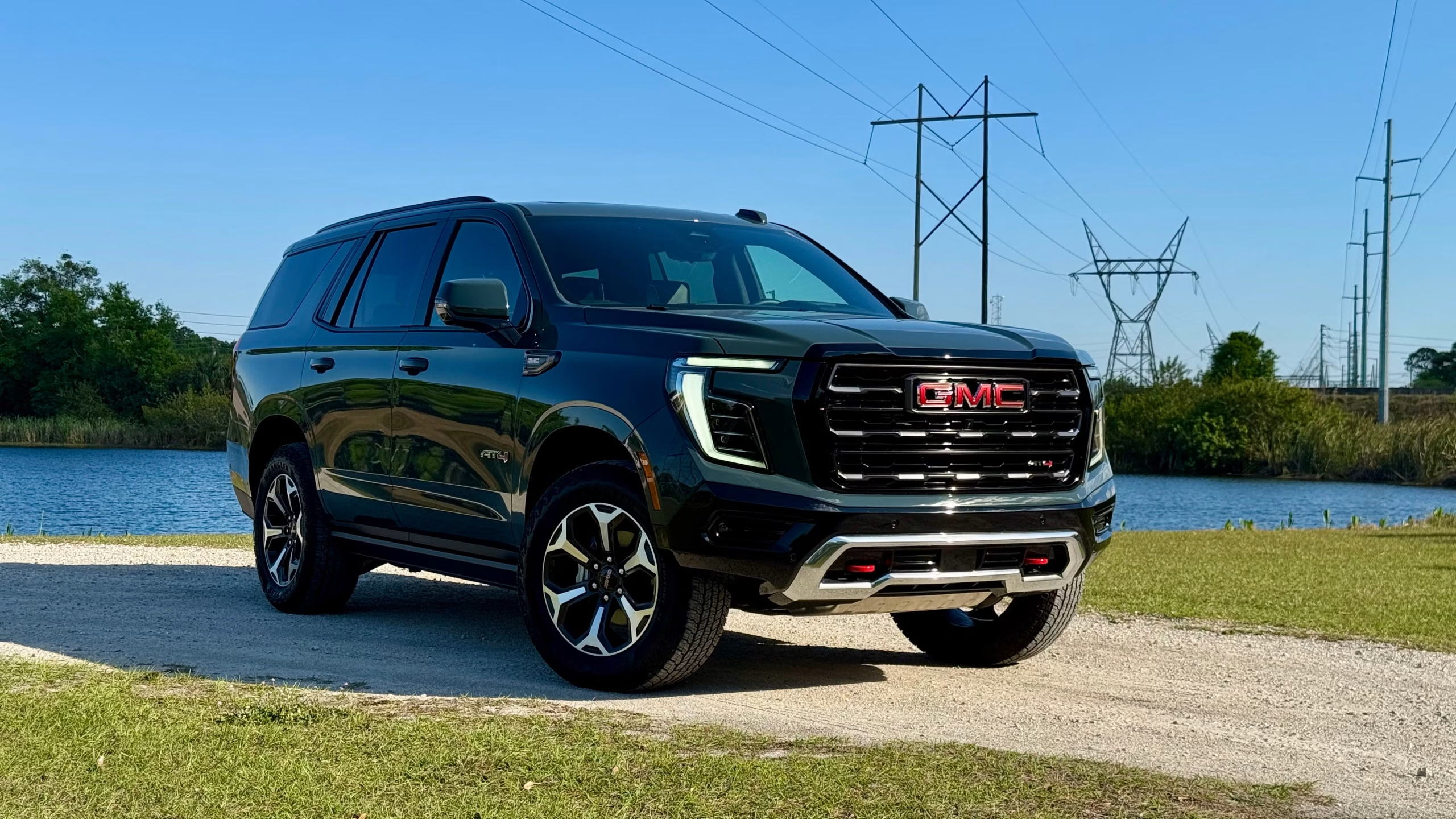
Do not buy a large diesel SUV if you drive almost only in the city.
Do not sacrifice essential safety equipment to save a little on the purchase price.
Research known reliability issues of the exact engine and gearbox you want.
All in all, it's going to be a good year for a new car!
Buying a car in 2026 does not have to be a gamble. Once you know what to avoid, a lot of “great deals” suddenly look much less attractive. Outdated city cars, first generation EVs with weak batteries, diesel SUVs used only in town, budget models that cut corners on safety, or cars with a long history of expensive failures all have one thing in common: they cost you far more over time than the price tag suggests. A bit of research before you sign saves a lot of frustration after.
The good news is that there have never been more solid choices than now. If you match the car to your real life and pay attention to safety, running costs and basic reliability, you are already ahead of most buyers. Take your time, check the exact engine and gearbox combination, look for honest reviews and real owner feedback, and do not be afraid to walk away if something feels wrong. The right car is the one that quietly does its job for years, not the one that impresses you for five minutes in a showroom.