News & Guides /
Why Some Cars Do Not Have a European COC
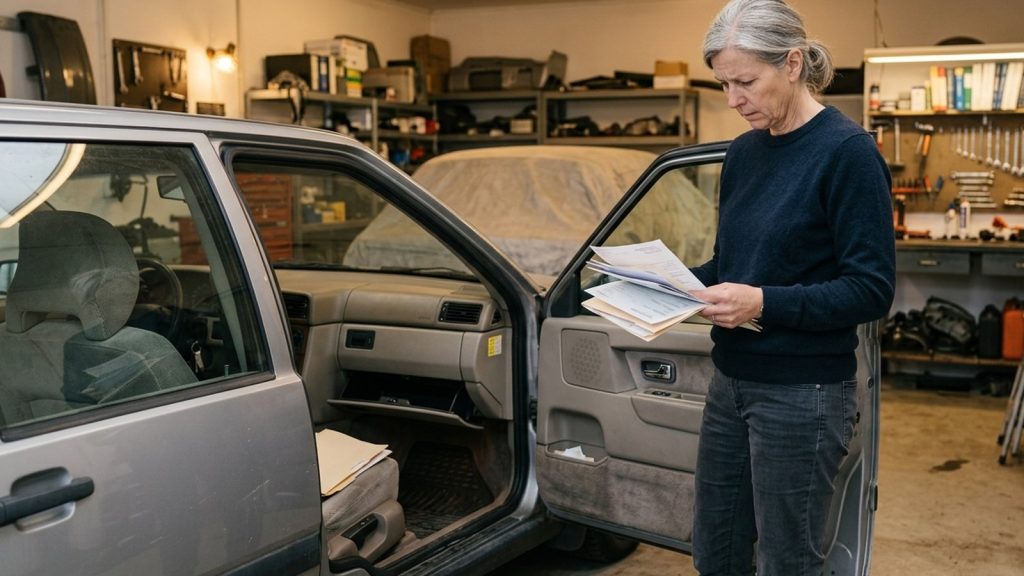
If you have tried to register a vehicle and been told that no COC is available, you are not alone. Cars without European COC documentation are more common than most buyers realise, and the reasons behind the absence are varied. Some are easily resolved. Others require more involved alternative registration pathways. Understanding why your car might be among those without a European COC is the critical first step toward finding the right solution.
This guide explains the most common reasons cars end up without a European COC, which situations are fixable and which are not, and how platforms like auto-coc.eu help resolve the most frequently encountered cases quickly and affordably.
Reason 1: The Vehicle Was Not Built for the EU Market
The most straightforward reason a car is among those without a European COC is that it was manufactured for a different market. Vehicles produced for the United States, Japan, Australia, Canada, the Gulf region, or other non-EU destinations are built to the regulatory standards of their intended market, not EU standards. A COC certifies EU compliance, so if the vehicle was never built to EU specifications, no EU COC was ever issued and none can be retrieved from manufacturer databases.
This applies even when the vehicle is made by a European brand. A BMW 5 Series produced for the US market is calibrated to American FMVSS standards. Even though an EU-specification 5 Series exists and has a COC, the US-specification unit does not share that approval. Cars without European COC for this reason require either a manufacturer declaration of conformity extension or an Individual Vehicle Approval process to achieve EU registration.
Reason 2: The COC Was Lost or Retained by a National Authority
A significant proportion of cars without European COC in current circulation actually had a COC at some point, but the document was lost during the vehicle’s ownership history. This happens frequently with vehicles that have changed hands multiple times, been resold across borders, or been registered in countries that retained the COC at the point of first national registration. Belgium, the Netherlands, and certain other EU countries historically collected the COC from the owner during the registration process. Our guides to registering an imported car in Belgium, registering in the Netherlands and bringing a Dutch car to another EU country explain how this plays out in practice.
This is the category where auto-coc.eu provides the most direct and valuable service. For cars without European COC due to loss or retention, the document can be retrieved from the manufacturer’s original database records and reissued in an authentic format accepted by registration authorities. This applies to the vast majority of EU-specification vehicles from all major brands and resolves the missing COC issue without requiring any alternative approval process.
Reason 3: The Vehicle Predates Digital COC Records
Older vehicles, particularly those manufactured before the mid-1990s, may be among cars without European COC simply because the certificate was never digitised and exists only as a paper record in manufacturer archives. The EU type-approval framework that standardised COC documentation was formalised progressively during the 1990s, and many vehicles from earlier eras did not generate the kind of searchable digital records that platforms like auto-coc.eu can access today.
For vintage or classic vehicles in this category, alternative registration processes are typically available at the national level. Many EU countries have specific procedures for registering vehicles of historical interest that do not require a standard COC. A technical inspection report, a manufacturer’s archive letter, or a specialist classic vehicle appraisal may substitute for a COC in these cases.
Reason 4: The Manufacturer Is No Longer in Business
Cars without European COC sometimes fall into this category when the vehicle was produced by a brand that has since ceased operations, merged into another company, or undergone significant corporate restructuring. If the manufacturer no longer exists in a form that maintains accessible vehicle records, retrieving a COC through standard channels becomes impossible.
This applies to certain niche brands, bankrupt manufacturers, and marques that were absorbed by larger groups without data continuity. In these situations, national type approval or individual vehicle approval is typically the only path to EU registration. auto-coc.eu’s expert team can advise on the most appropriate pathway for cars without European COC due to manufacturer discontinuity.
Reason 5: The VIN Has Been Modified or Is Non-Standard
Cars without European COC sometimes present this issue because the VIN, which is the unique identifier used to retrieve COC data, does not match any record in manufacturer databases. This can occur when the VIN plate has been damaged, replaced, or altered. It can also occur with certain grey-market imports or assembled vehicles where the VIN does not follow standard manufacturer encoding conventions.
A non-matching or absent VIN makes standard COC retrieval impossible, as no manufacturer database query can return results for a VIN it does not recognise. These cases are among the most complex to resolve and often require a physical inspection by a national type-approval authority before any registration can proceed. The VIN check at auto-coc.eu will identify this issue immediately, before any money is spent on a COC order.
Is Your Car Without a European COC? Start with a Free VIN Check
- auto-coc.eu checks manufacturer databases in real time and tells you immediately whether a COC is retrievable — find your brand here.
- For resolvable cases: order your official COC, with free standard delivery or Express in 2 to 3 business days.
- For complex cases: guidance on the best alternative pathway.
- A free VIN check means you never pay for a COC that cannot be issued.
Frequently Asked Questions: Cars Without European COC
Yes, in many cases, though not through the standard COC-based registration process. Cars without a European COC that cannot be resolved through manufacturer database retrieval can often be registered through Individual Vehicle Approval or National Type Approval procedures, which test the vehicle against EU standards on an individual basis. The process is slower and more expensive than standard COC-based registration, but it is a legitimate and well-established pathway.
auto-coc.eu can advise on which pathway is appropriate for your specific car without European COC situation, based on the vehicle’s origin, age, and VIN status.
Not necessarily. In many EU countries, you can drive a vehicle on temporary transit plates or on the basis of a foreign registration while the COC and registration process is underway. What is illegal is driving an unregistered vehicle on public roads without any form of temporary authorisation. Being without a European COC does not mean the vehicle cannot be used during the resolution process, but it does mean full registration cannot be completed until the COC issue is addressed.
Check your home country’s regulations on temporary use of unregistered imported vehicles to understand what is permitted during the COC resolution period.
No. A roadworthiness test confirms mechanical condition for road safety purposes. A COC confirms that the vehicle meets EU type-approval standards. These are two separate regulatory requirements, and a roadworthiness pass does not substitute for a COC in the registration process. Both are typically required, and neither replaces the other.
For cars without a European COC that go through Individual Vehicle Approval, the IVA process incorporates elements of both safety inspection and compliance certification. The IVA certificate that results from a successful process serves as the registration document for vehicles that cannot obtain a standard COC.
Almost certainly yes. If your car was previously registered in an EU country, it almost certainly had a COC at some point. The fact that it is now without a European COC in current documentation is most likely due to loss or retention by a previous authority. auto-coc.eu retrieves COC data directly from manufacturer databases independently of what happened to the physical document, making this the most common and most straightforwardly resolved category of cars without European COC.
Run the free VIN check at www.auto-coc.eu to confirm availability. In the majority of cases involving previously EU-registered vehicles, the COC data is retrievable and can be ordered immediately.
There is no formal expiry period after which a vehicle becomes permanently ineligible for COC retrieval simply because time has passed. However, manufacturer records are not preserved indefinitely, and for very old vehicles the practical availability of COC data diminishes over time. There is no regulatory deadline that would prevent you from obtaining a COC for a 15-year-old vehicle today, as long as the manufacturer’s records contain the relevant data.
The practical risk of delay is not legal but commercial: if manufacturer databases are archived or discontinued, retrieval becomes impossible. For vehicles nearing the edge of what manufacturer digital records cover, acting sooner rather than later is advisable.
For the most common category of cars without European COC where the document was lost but is retrievable through manufacturer databases, the cost through auto-coc.eu depends on your car’s brand and model, with free standard delivery or Express in 2 to 3 business days. This is by far the most affordable resolution available, significantly cheaper than obtaining a replacement through an authorised dealer.
For cars without a European COC that require IVA or NTA processes, costs are higher and depend on the vehicle’s origin, the specific country’s process, and any modifications required for compliance. auto-coc.eu provides free consultation to help you understand the expected cost before you commit to any pathway.