


Written by
I. Constantin

Date released
06.05.2026
Comments
0 so far - be the first!
You have the Certificate of Conformity in hand. The registration authority reviews it alongside your vehicle’s documents and flags a discrepancy. The VIN on the COC does not exactly match the one on the door jamb. The colour code is different. The engine displacement listed does not align with the engine number. The CO₂ figure does not correspond to the trim level you purchased.
The registration process stops. Incorrect COC data is more common than most people realise. It is also, in the majority of cases, entirely fixable without abandoning the registration application or pursuing expensive individual homologation.
But the solution depends entirely on understanding what type of error you are dealing with and who has the authority to correct it.
Before getting into solutions, it helps to understand how these discrepancies occur — because the cause of the error determines who can fix it and how quickly.
COCs are generated by the manufacturer, sometimes automatically from production databases and sometimes with manual data entry components. In high-volume production environments, errors creep in. A digit transposed in a VIN. A colour code entered incorrectly. A weight figure pulled from a similar model rather than the exact variant. These mistakes leave the factory with the vehicle and are only discovered when someone compares the COC to the physical car or to other documents.
Large manufacturers operate multiple internal databases — production records, sales records, compliance records, aftersales systems — that are not always perfectly synchronised. A vehicle built with a specific trim configuration may be recorded differently in the production database than in the compliance database used to generate COCs. The result is a COC that accurately reflects what the compliance system recorded, but does not match the physical vehicle.
If a vehicle was ordered with non-standard powertrain options, weight-affecting accessory packages, or market-specific variants, the COC may be generated for the base configuration rather than the actual build.
This happens when the same model name covers multiple technical variants — some EU-spec, some not — and the COC retrieval process returns a document for the wrong one. A right-hand drive variant and a left-hand drive variant of the same model may have different technical specifications. A high-altitude variant and a standard variant may have different emissions tuning. If the COC retrieved corresponds to the wrong variant, the data will be systematically incorrect across multiple fields.
If the COC is a replacement rather than the original issued at point of sale, errors can be introduced during retrieval, transcription from archived records, or formatting into current document templates. This is why the source and process used to obtain a replacement COC matters — a document retrieved through channels with incomplete or poorly migrated archives is more likely to contain errors than one retrieved directly from the manufacturer’s current production database.

Not all discrepancies carry the same weight. Understanding which fields registration authorities scrutinise most carefully helps you prioritise where to focus.
The most vital field. A single transposed digit will halt registration in every EU state. It is the primary link between the physical vehicle and its documents; any mismatch must be resolved immediately.
Directly impacts registration and annual circulation taxes. An incorrect figure leads to wrong tax calculations, creating both financial and compliance issues that will be flagged by authorities.
Used for tax classification and insurance categorisation. Discrepancies here are typically identified during national technical inspections like the ITV or TÜV.
Relevant for insurance, specific road tax calculations, and determining required driving licence categories. While less frequently flagged, it can still cause administrative delays.
A minor concern. Most authorities now use descriptive terms rather than strict manufacturer codes. A mismatch is unlikely to block registration but may cause minor friction.
Usually self-evident from the vehicle itself. Any minor clerical errors in these fields are typically easily resolved with standard supporting documentation.
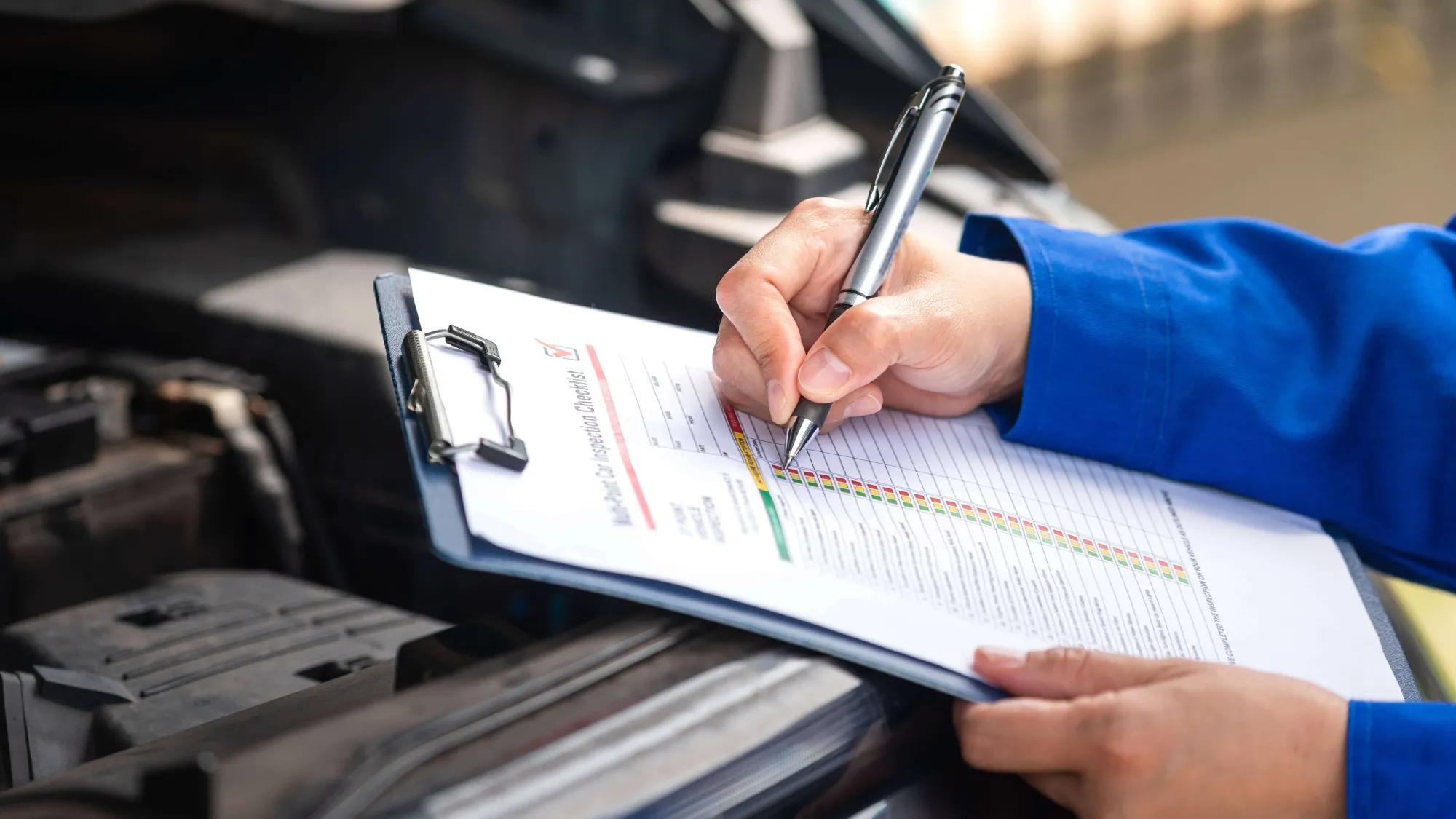
Before taking any action, establish precisely what is wrong. Compare the COC, field by field, against:
Document every discrepancy in writing, noting the field, the value on the COC, and the value on the vehicle or other documents. This record will be essential in every subsequent step.
Once you know what is wrong, you need to establish where the error originated — because this determines who has the authority and the obligation to correct it.
If the error is on the COC and the vehicle’s compliance plate is correct: The COC was generated or retrieved with incorrect data. The manufacturer or the retrieval service is responsible for issuing a corrected document.
If the error is on both the COC and the compliance plate, but the vehicle’s actual specifications are different: This is rarer but more serious. It suggests a production error — the vehicle was built with components that differ from its documentation. This requires manufacturer involvement and potentially a physical inspection.
If the COC is correct but another document (the original registration certificate, for example) contains the error:The problem is not with the COC but with the other document. Contact the issuing authority in the country where that document was produced.
If the error is a mismatch between the COC and the registration authority’s own system: Some authorities maintain national databases of vehicle specifications that may be outdated. In this case, the COC may be correct, and the authority’s system may need to be updated — a situation that requires direct engagement with the registration authority itself.
For errors that originate in the COC itself — the most common scenario — the solution is to request a corrected document from the manufacturer or from the specialist service through which the COC was obtained.
If the COC was obtained through a specialist retrieval service: Contact the service directly and provide your documentation of the discrepancy. Reputable services will investigate the source of the error and reissue the document with correct data at no additional cost, provided the error is on their end. If you obtained your COC through auto-coc.eu, contact their support team with the specific fields in error and the evidence supporting the correct values — the process is straightforward and resolved directly without you needing to engage the manufacturer.
If the COC was obtained directly from the manufacturer: Submit a formal written correction request to the manufacturer’s technical department — not customer services, which typically lacks the authority to amend technical documents. Include a copy of the erroneous COC, copies of the vehicle’s compliance plate photograph and original registration documents, and a clear written explanation of each discrepancy.
Manufacturers are legally obligated to issue accurate COCs under EU Regulation 2018/858. An error on a COC that was generated under their type approval is their error to correct. Document your request carefully and keep records of all correspondence, including dates. If the manufacturer does not respond within a reasonable timeframe — typically 15 working days — escalate to the national type approval authority in the manufacturer’s home country.
Official, manufacturer-issued certificates for 90+ brands.
Express delivery available — PDF sent immediately upon processing.
Browse All COCs →If your registration deadline is approaching and the corrected COC has not yet been received, contact the registration authority and explain the situation in writing, providing evidence that a correction is in progress. Most authorities will grant a short administrative extension when the delay is caused by a documented manufacturer or retrieval error rather than any action or omission by the owner.
Do not attempt to submit the application with the erroneous COC in the hope that the discrepancy will be overlooked. This approach almost never works and can complicate the subsequent correction process by creating a paper trail of conflicting documents.
It is important to be clear about the limits of what a COC correction can achieve. A COC can only accurately reflect the specifications of the vehicle as it was manufactured and type-approved. There are two situations where a corrected COC will not solve the underlying problem:
The vehicle has been modified after manufacture. If the vehicle has been fitted with a different engine, modified suspension, aftermarket lights, or any other change that affects the technical specifications covered by the COC, the COC cannot be corrected to reflect those modifications — because the COC documents the original factory specification, not the current state of the vehicle. Modified vehicles require individual technical approval for the modified configuration.
The vehicle was never EU type-approved. If the vehicle was built for a non-EU market and the discrepancy reflects the fact that it simply does not meet EU specifications, no correction to the COC will resolve the registration issue. The vehicle requires Individual Vehicle Approval, not a corrected COC.
The best time to check your COC for errors is before you submit your registration application — not after it has been rejected.
When you receive your COC, check it immediately against the vehicle’s compliance plate and original registration documents. Pay particular attention to the VIN, the CO₂ figure, the engine displacement, and the kerb weight. These are the fields most likely to be flagged by registration authorities and most likely to affect your tax calculations.
If you obtain a replacement COC through a specialist service, verify the data before using it in a registration application. A quick cross-check against the physical vehicle takes ten minutes and can save weeks of administrative back-and-forth. auto-coc.eu provides official COC documents retrieved directly from manufacturer databases, which minimises the risk of retrieval errors — but a basic verification check on receipt remains good practice regardless of the source.
Enter your VIN, select your brand, and choose standard or express delivery.
Best price guaranteed · EU-compliant · Multilingual support


