News & Guides /
How to Check Whether Your Vehicle Is Eligible for a European COC
Before you order a Certificate of Conformity or begin any vehicle registration process in the EU, there is one critical question you need to answer: is your vehicle eligible for a European COC? Not every vehicle on the road in Europe was manufactured to EU specifications, and not every car that looks similar to an EU-spec model will have COC data available in manufacturer records. Understanding eligibility before you start the process saves time, money, and a great deal of frustration.
This guide explains what determines whether a vehicle is eligible for a European COC, how to perform the check using your VIN, what the most common outcomes are, and what your options are when a standard COC is not available. By the end, you will know exactly where your vehicle stands and what steps to take next.
What Makes a Vehicle Eligible for a European COC?
A vehicle is eligible for a European COC when the manufacturer produced it to EU type-approval standards and registered that approval with the relevant European authority. EU type-approval is the regulatory process by which a vehicle model is certified as meeting EU safety, emissions, and technical requirements. Every vehicle model legally sold new in the EU undergoes type-approval, and each individual vehicle produced under that approval is theoretically eligible for a European COC linked to the manufacturer’s records.
The key phrase is produced to EU type-approval standards. A vehicle manufactured for a different market, even by a European brand, may not be vehicle eligible for European COC retrieval in the standard sense. A BMW produced for the US market, for example, meets American FMVSS standards, not EU standards. Even though the model exists in EU-specification form, the specific non-EU unit was not built to the same regulatory framework and does not have an EU COC in the manufacturer’s database.
How to Check Eligibility Using Your VIN
The VIN, or Vehicle Identification Number, is the 17-character code that uniquely identifies your vehicle. It encodes the manufacturer, model, production plant, production year, and a unique serial sequence. The most efficient way to check whether your vehicle is eligible for a European COC is to run a VIN check through auto-coc.eu. The platform searches official manufacturer databases in real time and reports within minutes whether a COC is available for your specific vehicle.
The VIN check at auto-coc.eu is free before any payment is made. You enter the VIN, the system queries the relevant manufacturer database, and you receive a clear answer: COC available or not available. If the COC is available, you can proceed to order immediately. If it is not, the platform advises on the most appropriate alternative pathway. This free check is the fastest and most reliable method for determining whether your vehicle is eligible for a European COC without committing any budget.
Vehicles That Are Typically Eligible for a European COC
Vehicles that are most reliably eligible for a European COC include all models manufactured by European brands for the EU market, as well as non-European brand models that were sold new through official EU dealerships. This covers the overwhelming majority of vehicles on European roads: BMW, Mercedes-Benz, Volkswagen, Audi, Skoda, Seat, Volvo, Peugeot, Renault, Fiat, Opel, Toyota EU-spec, Honda EU-spec, Hyundai, Kia, and many others.
Pre-Brexit UK vehicles manufactured before January 2021 are also generally vehicle eligible for European COC retrieval, because they were produced to EU standards during the period of UK EU membership. For these vehicles, auto-coc.eu can typically retrieve the COC from the manufacturer’s records just as smoothly as for any other EU-market vehicle. Post-Brexit UK vehicles require individual assessment, which auto-coc.eu provides free of charge as part of the VIN check process.
Vehicles That May Not Be Eligible for a Standard European COC
Several categories of vehicle are not automatically eligible for a European COC through standard database retrieval. Non-EU specification vehicles from the United States, Japan, Australia, Canada, and the Gulf region were manufactured to different regulatory standards and typically do not have EU COC data in any manufacturer database. For these vehicles, registration in the EU requires either an Individual Vehicle Approval process, a National Type Approval procedure, or, in limited cases, a manufacturer declaration of conformity extension.
Heavily modified vehicles, vehicles with altered VINs, and vehicles manufactured before the widespread adoption of digital record-keeping in the 1990s may also have limited COC availability. If your vehicle falls into any of these categories and you are unsure whether it is vehicle eligible for European COC retrieval, the free VIN check on auto-coc.eu is the correct first step. The platform will tell you clearly what is and is not possible before you spend any money.
What to Do If Your Vehicle Is Not Eligible for a Standard European COC
If the VIN check confirms that your vehicle is not eligible for a European COC through standard manufacturer database retrieval, do not panic. There are established legal pathways for registering vehicles in the EU without a standard COC. The Individual Vehicle Approval process, available in most EU member states, allows a single vehicle to be tested and approved against EU standards by a national authority. Once approved, the vehicle receives documentation equivalent to a COC for registration purposes.
If your vehicle falls outside standard COC retrieval, registration is still possible through other established routes. Depending on your country and vehicle, this usually means an Individual Vehicle Approval (IVA) or national single-vehicle approval, requesting a declaration of conformity directly from the manufacturer, or checking whether the vehicle qualifies under an EU mutual recognition agreement. The important thing is to confirm your situation first: the free VIN check on auto-coc.eu shows immediately whether a standard COC is available, so you know which route applies before you spend anything.
Check Your Vehicle Eligibility for Free at auto-coc.eu
- Run a free VIN check at auto-coc.eu before spending any money on COC retrieval.
- Get a clear answer in minutes: eligible or not eligible for a European COC.
- If eligible, order your official COC (pricing depends on your car’s brand and model) with free standard delivery or Express in 2 to 3 business days.
- If not eligible, the VIN check tells you right away, so you never pay for a COC that cannot be issued.
Frequently Asked Questions: Vehicle Eligible for European COC
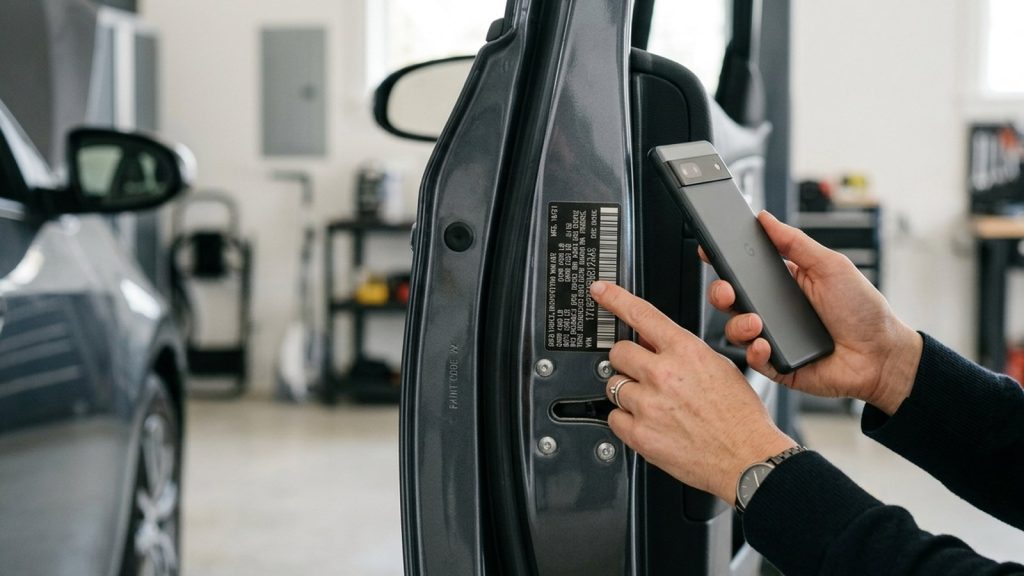
Your VIN is printed in several locations on the vehicle: on the dashboard visible through the windscreen from outside, on the driver’s door jamb, in the engine bay, and in your vehicle registration documents and insurance certificate. It is always 17 characters long and contains a mix of letters and numbers. Do not confuse it with the engine number, which is shorter and stamped directly on the engine block.
Once you have your VIN, enter it at www.auto-coc.eu to check whether your vehicle is eligible for a European COC. The check takes under a minute and costs nothing.
Not automatically. European brands produce different specifications for different markets. A German-brand vehicle manufactured for the US market was built to American safety and emissions standards, not EU standards. However, because the same model also exists in EU-specification form, there is sometimes a pathway for the manufacturer to issue or verify a COC for the EU-equivalent specification.
auto-coc.eu assesses these cases individually. The free VIN check is the correct starting point. If a standard retrieval is not possible, the team can advise on whether a manufacturer declaration or other pathway applies to your specific vehicle.
It depends on the vehicle’s age and the manufacturer’s record-keeping. Vehicles manufactured after approximately 1996 to 2000 typically have their COC data in digital manufacturer records. Older vehicles may have paper-only records that are not accessible through standard database queries. In these cases, the manufacturer may need to be contacted directly, or alternative registration pathways may need to be explored.
auto-coc.eu handles requests for older vehicles and will advise during the VIN check process whether data is available. The platform does not charge for failed retrievals, so there is no financial risk in checking.
No. A national roadworthiness test confirms that your vehicle is in safe mechanical condition for road use. It does not confirm that the vehicle meets EU type-approval standards, which is what the COC certifies. These are two separate requirements, and both are typically needed for a full registration in an EU member state. A roadworthiness pass does not substitute for a COC.
If your vehicle is not eligible for a European COC, the roadworthiness test may be part of the Individual Vehicle Approval process, but it is not a replacement for it.
Run a VIN check on auto-coc.eu to confirm whether a COC is retrievable for your vehicle. If the data is in the manufacturer’s database, you can order a replacement COC directly through the platform without needing to locate the physical document that the seller misplaced. This is one of the most common use cases for auto-coc.eu and is resolved quickly and affordably in the majority of cases.
If the seller genuinely provided a COC at the point of sale and you have lost it, the replacement process through auto-coc.eu is the same. The platform makes no distinction between vehicles that never had a COC in the buyer’s possession and those where the document was subsequently lost.
Not guaranteed, but highly likely. Most vehicles that were legally registered in an EU member state when new were sold with a COC. However, COC data can become inaccessible due to manufacturer database changes, mergers, discontinued brands, or the age of the vehicle. Registration in the EU does not always guarantee that a COC can be retrieved today.
The only way to confirm current COC retrievability is a live VIN check against manufacturer databases, which is exactly what auto-coc.eu provides for free. Do not assume that EU registration history guarantees current COC availability.